
What Changes the Scope of a Chimney Repair
No two chimney repairs are the same job. Here are the real factors that change a repair’s scope in the Santa Clara Valley — no prices, just the drivers.
Published
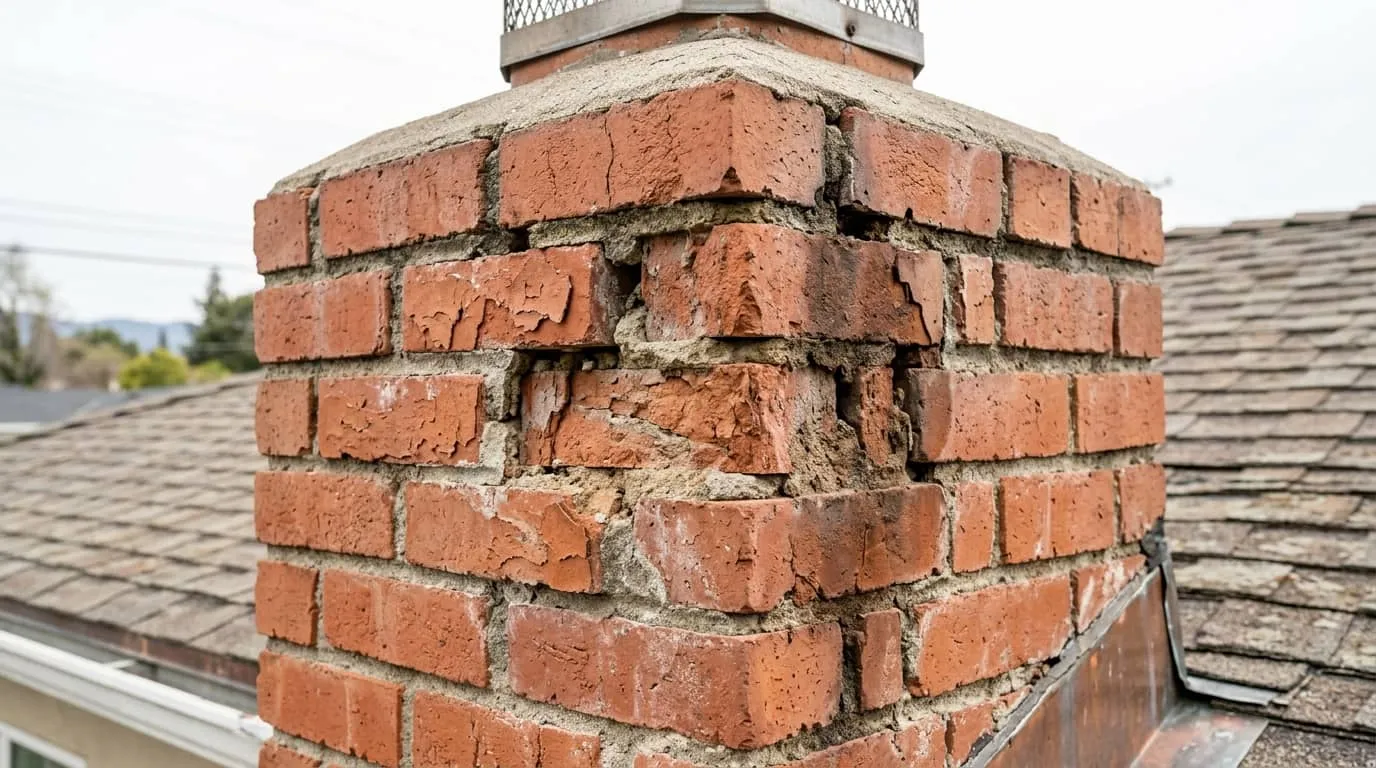
A chimney repair’s actual scope depends on a handful of real, checkable factors: how far the damage has spread, what the chimney is built from, and how accessible it is, not on the address alone. Here is what genuinely moves the work.
We are asked fairly often, before an inspection has even happened, roughly what a chimney repair costs. We will not put a number or a range on that here, because doing so before actually looking at the specific chimney would be a guess dressed up as an estimate. What we can do is explain the factors that genuinely move a repair’s scope from a small patch to a larger project, so the question makes more sense once an inspection has actually happened.
How far the damage has already spread
A hairline crack caught early on a crown is a fundamentally smaller job than the same crack left through two or three more dry summers and a wet winter, by which point water has often already worked its way down into the mortar joints below. The single biggest driver of repair scope is simply how much time has passed between when a problem started and when it got caught, which is exactly why an annual inspection, even on a chimney that seems fine, tends to keep repairs smaller than they would otherwise become.
What the chimney is actually built from
A site-built masonry chimney and a factory-built metal system fail in different ways and get repaired with different materials and labor. Repointing mortar on an older brick stack is skilled masonry work, priced differently from replacing a chase pan or cap on a factory-built system, which is closer to sheet-metal and fitting work. Neither is inherently more or less expensive in every case (it depends on the specific damage), but they are genuinely different categories of labor, and an estimate has to start from knowing which one applies.
Access, or literally how hard it is to reach
A single-story ranch house with a straightforward roof pitch is a fundamentally easier chimney to work on than a steep multi-story roof, a chimney set back from any safe ladder placement, or a hillside property where the roof itself is hard to reach safely. Access affects labor time directly, independent of how much actual repair work the chimney needs once someone is up there.
Whether seismic bracing is part of the scope
In our part of California, adding or upgrading seismic bracing on an older unreinforced masonry chimney is sometimes bundled into a repair that started as a crown or mortar job, once an inspection reveals the chimney also lacks adequate bracing. That is real additional engineering and labor, separate from cosmetic or weather-driven repair, and it is the kind of finding that can meaningfully change a job’s scope partway through. It’s exactly why we scope in writing before starting rather than quoting from a phone description alone.
How many flues, and whether they are all affected
A repair on a single-flue chimney is a different job from the same repair needed across two or three flues on a larger or older property. The diagnosis and materials are similar, but the labor scales with how much masonry or metal chase actually needs the work.
Read next
More from the blog
Get a written scope, not a guess
We inspect first and put the repair in writing, with photos, and never give a number sight unseen.