
What Silicon Valley’s Tract-Housing Boom Built Into Your Chimney
Most Santa Clara Valley homes date to the 1960s–1980s tech boom, and most of them run factory-built chimneys, not brick. Here is what that means for service.
Published
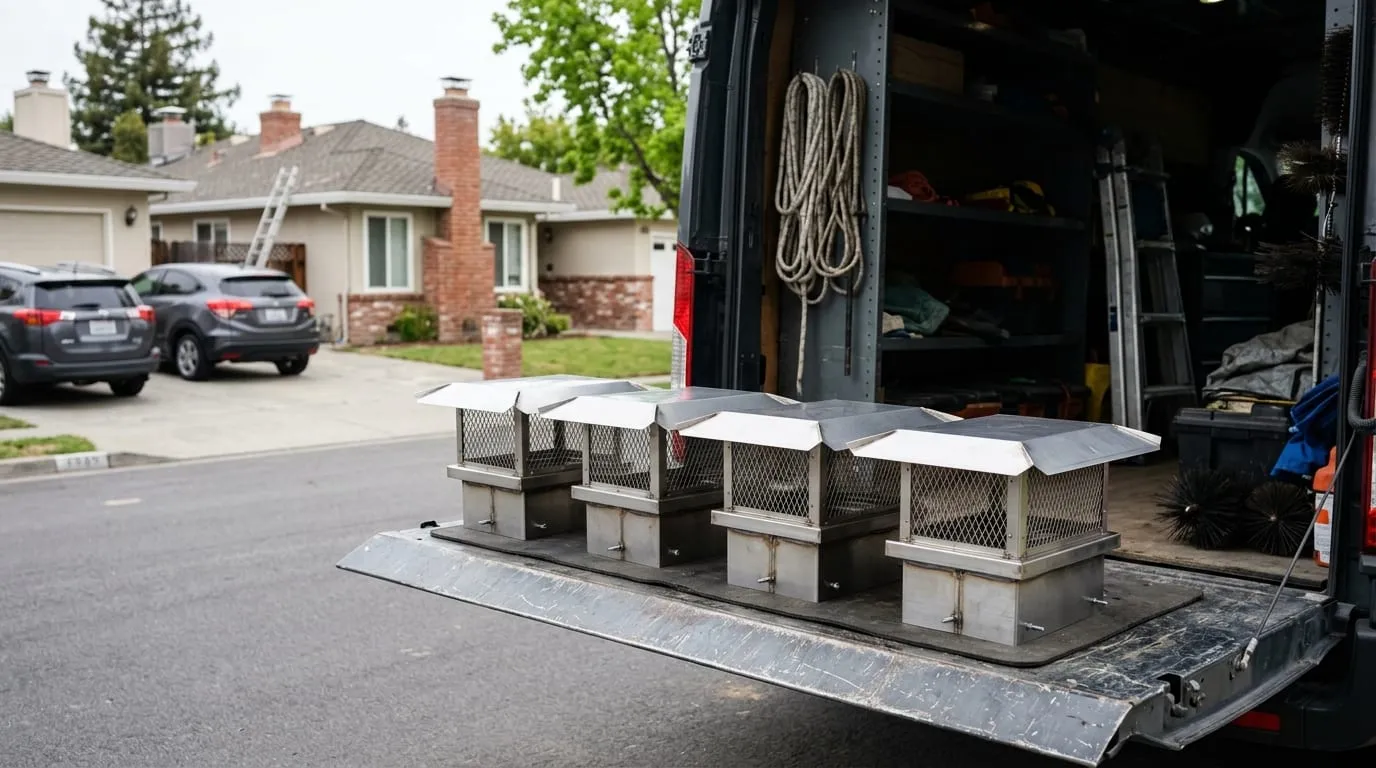
The tract-housing wave that filled Sunnyvale, Cupertino and Milpitas as the electronics industry grew left most of the valley with factory-built chimney systems rather than site-built brick. That single fact changes almost everything about how these chimneys fail.
Walk through almost any pre-1980s Santa Clara Valley subdivision and you are looking at a house built for a workforce that did not exist a generation earlier. Fairchild Semiconductor’s 1957 arrival in Mountain View, followed by a wave of spinoffs and suppliers through the 1960s and 1970s, pulled tens of thousands of new households into the valley faster than the existing housing stock could absorb them. The response was fast, large-scale tract construction: entire neighborhoods in Sunnyvale, Cupertino, Milpitas and Santa Clara built out in a matter of a few construction seasons, not decades. That speed shaped the fireplace and chimney systems those houses got, and it is still shaping what a service call in one of them actually involves today.
Factory-built systems, not site-built masonry
A site-built masonry chimney (bricklayer, mortar, a poured concrete crown) is slow and skilled work, exactly the kind of construction a fast-moving tract developer had every incentive to avoid where a cheaper, faster alternative existed. Factory-built, zero-clearance fireplace systems, prefabricated in a plant and installed inside a framed metal chase on site, filled that need starting in the postwar decades and became close to standard by the 1960s and 1970s tech-boom building wave. Walk into a typical Sunnyvale or Cupertino tract home from that era and the fireplace is very likely one of these systems: a metal firebox unit, a double-wall or triple-wall metal flue running up through a framed chase, and a cap at the top rather than a poured masonry crown.
Why that changes what actually fails
A masonry chimney’s problems concentrate at the crown and the mortar joints, the parts exposed directly to weather and prone to cracking over years of thermal cycling. A factory-built system does not have a crown or mortar joints to speak of, so its failure points sit somewhere else entirely: the cap, which can corrode or come loose; the chase pan at the base of the metal chase, which can rust through and leak; and the flue liner itself, which still accumulates creosote the same as masonry does and still needs an annual sweep regardless of what it is built from. A technician walking into a tech-boom tract home already has a good guess at what kind of system is waiting, but the actual inspection still has to confirm it. A handful of these subdivisions do carry masonry fireplaces, particularly in slightly older pockets built just before the factory-built systems became standard.
The part everyone gets wrong: universal caps
The single most common mismatch we correct on a call into one of these neighborhoods is a universal or masonry-style cap fitted to a factory-built system that needs a specific manufacturer-listed model instead. It is an understandable mistake: a cap is a cap, visually, and a generic one from a hardware store often physically fits well enough to sit on top of the chase. The problem is that a factory-built fireplace system’s UL listing, and often the homeowner’s insurance coverage tied to it, specifically requires the cap model the manufacturer listed for that unit. A mismatched cap can quietly void both, and it is not something a homeowner would typically discover until it mattered.
What an inspection on this housing type actually looks for
Because these systems are metal end to end rather than masonry, an inspection on a tech-boom tract home leans more heavily on checking the chase pan for rust or leaks, confirming the cap is the correct listed model, and running a camera down the flue to check the liner’s condition. Creosote glazing and liner damage look somewhat different on a metal system than on clay tile, so it is worth a technician who has actually serviced a lot of these specific systems rather than one applying a masonry-first checklist out of habit.
Read next
More from the blog
Get a written scope, not a guess
We inspect first and put the repair in writing, with photos, and never give a number sight unseen.