
When Chimney Work in the South Bay Actually Needs a Permit
Permit requirements for chimney repair vary city by city across Santa Clara and San Mateo counties. Here is what triggers one, and what usually does not.
Published
Whether a chimney repair needs a building permit depends on the city, the scope of the work, and whether it touches structural or life-safety systems, not on a single countywide rule. Here is how to think about it before assuming either way.
One of the more common questions we get partway through scoping a repair is whether the work needs a permit. The honest answer is that it depends on the city, because permitting authority for a single-family home sits with each municipality’s own building department, not with Santa Clara or San Mateo County as a whole. Sunnyvale, San Jose, Palo Alto, Redwood City and every other city on our service list each run their own permitting process, and while the underlying California Building Code they all work from is the same, the local threshold for what needs a permit can differ in the details.
What generally does not require a permit
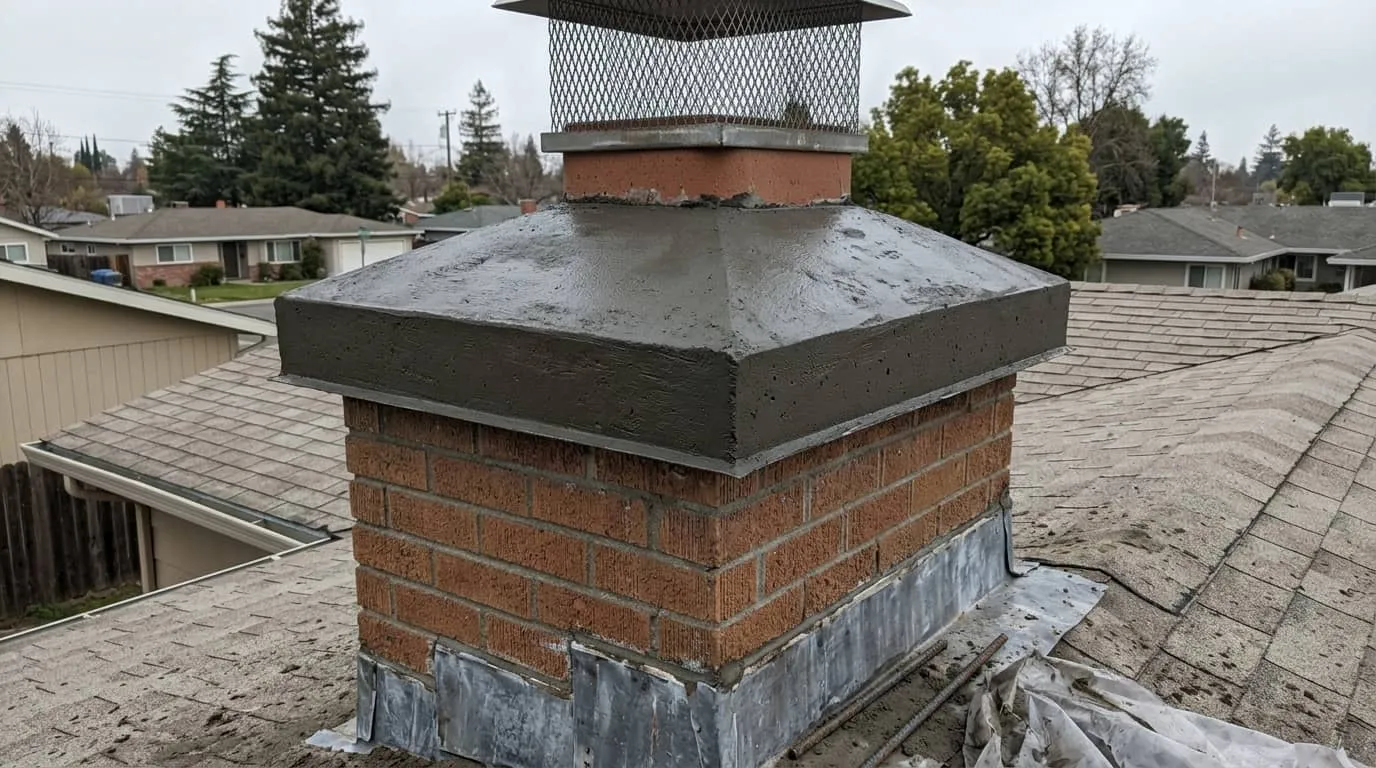
Routine repointing of mortar joints with no structural change, cosmetic crown resurfacing, and cap or spark-arrestor replacement typically fall under normal maintenance and do not usually trigger a permit requirement across most of our service cities. These are the most common chimney repairs we perform, and most of them proceed without a permitting step. The general principle most building departments apply is that like-for-like repair and maintenance, done without altering the structure’s footprint, height or structural support, sits below the threshold that requires review.
What generally does require one
Work that changes the chimney’s structural support crosses into territory most building departments want reviewed: a seismic-bracing retrofit that adds new anchor points into the roof framing, a partial or full rebuild above the roofline, or any modification that alters the chimney’s height or footprint. That review covers both structural sign-off and, in some jurisdictions, compliance with current setback or height regulations that did not exist when an older chimney was originally built. Converting a wood-burning fireplace to a gas appliance, or the reverse, can also trigger a permit requirement in some cities, since it touches gas line and venting code separately from the masonry itself.
Why this varies by city instead of being one countywide answer
Building-code enforcement in California happens at the city (or, for unincorporated areas, the county) level, even though the underlying code itself is largely standardized statewide. That means Sunnyvale’s building department and, say, Palo Alto’s can apply slightly different thresholds or review processes to functionally similar chimney work, even under the same base code. It’s a fact that surprises some homeowners who assume “chimney repair” is a single, uniformly regulated category everywhere.
What we tell you before starting
When a repair’s scope crosses into territory that plausibly needs a permit, seismic bracing chief among them, we tell you plainly before starting, rather than after the fact, and we can point you toward the right city department for that specific jurisdiction. For routine maintenance-level repairs, we proceed on the same basis any qualified contractor does: like-for-like work within the existing structure, no permit assumed necessary unless the specific scope calls for one.
Read next
More from the blog
Get a written scope, not a guess
We inspect first and put the repair in writing, with photos, and never give a number sight unseen.