
The Caltrain Corridor’s Victorians and the Seismic Bracing Question
Redwood City, San Carlos and Palo Alto’s Caltrain-corridor Victorians carry brick chimneys older than seismic bracing codes. Here is why that gap matters.
Published
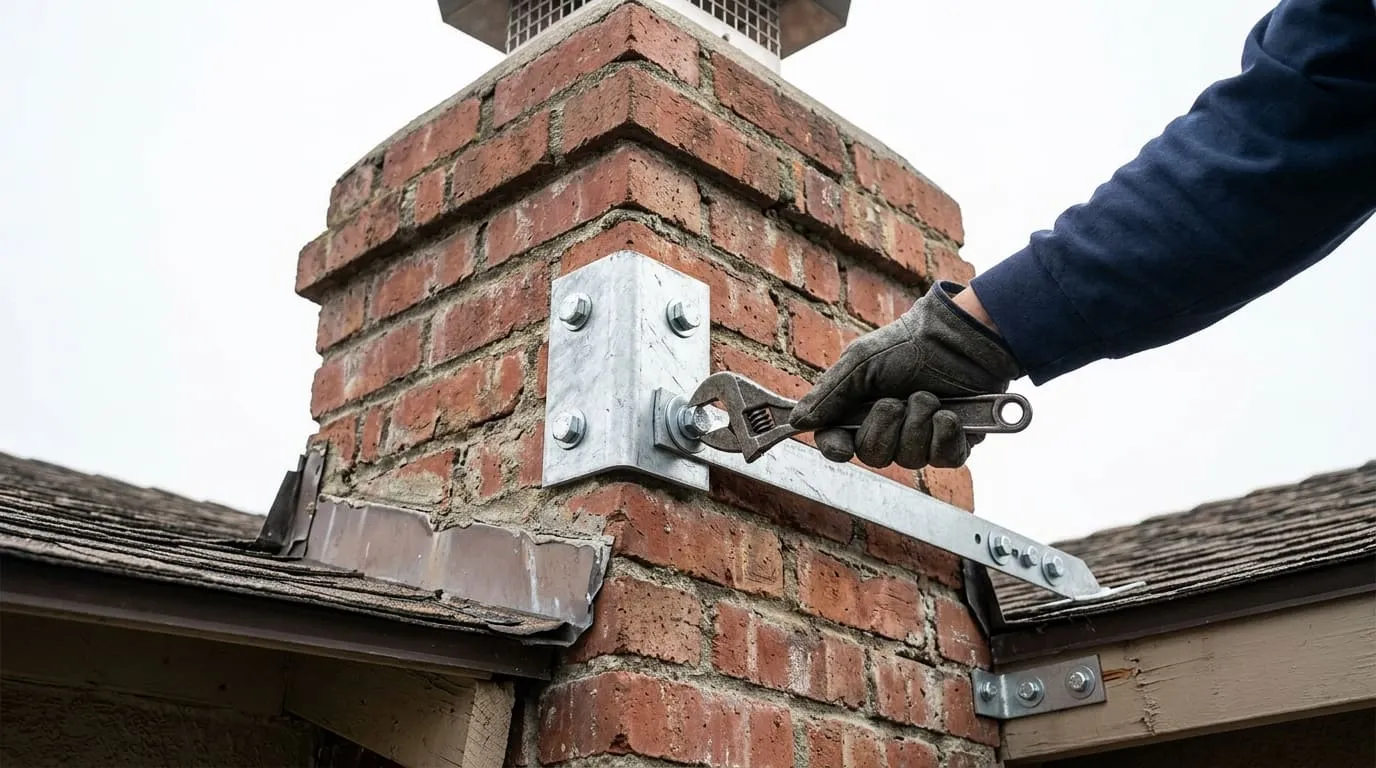
The historic homes lining the Caltrain corridor through Redwood City, San Carlos and Palo Alto often carry their original brick chimneys, built decades before modern seismic-bracing requirements existed. Here is why that gap matters, and how it gets checked.
The Peninsula’s Caltrain corridor, the string of downtowns that grew up around the original Southern Pacific rail line through Redwood City, San Carlos, Menlo Park and Palo Alto, preserves a genuine concentration of late-1800s and early-1900s residential architecture, Victorians and early Craftsman homes among them, in a region where most housing dates from the postwar decades or later. Many of those homes still carry their original brick chimney, built by a bricklayer working with the standards and materials of a century or more ago. Real age, real masonry, no engineered bracing: that combination is exactly what makes seismic performance a genuine, checkable question rather than a hypothetical one.
Why an unbraced masonry chimney is a real risk here specifically
A brick chimney is essentially a tall, freestanding masonry column, mortared together but not reinforced with steel the way a modern structure would be. In a region without significant seismic activity, that construction method causes no particular problem. The Santa Clara Valley and mid-Peninsula are not that region. The San Andreas Fault runs along the Santa Cruz Mountains a short distance to the west of the Caltrain corridor, and the record of moderate-to-large earthquakes here goes back well beyond living memory. An unreinforced masonry chimney, particularly one extending well above the roofline, is genuinely more vulnerable during a significant earthquake than a modern factory-built system or a properly braced masonry stack; engineering assessments after past California earthquakes have repeatedly found chimney damage concentrated in exactly this category of older, unbraced masonry.
What seismic bracing actually is
Bracing an existing masonry chimney typically means adding steel strapping and anchor brackets that tie the chimney to the home’s roof framing at one or more points, giving the tall masonry column lateral support it did not originally have. It is a retrofit, not a rebuild. The existing brick generally stays in place, and the bracing is added around and through it, engineered to the specific height and construction of the chimney in question rather than a one-size fitting.
How we check for it
On an inspection of any pre-1960s masonry chimney (which, along the Caltrain corridor, often means the original construction), we look specifically for visible bracing straps or anchors, and for their apparent condition if present. A chimney with no visible bracing at all is not automatically dangerous on the spot, but it is a genuine candidate for a bracing retrofit, and we say so plainly rather than either alarming an owner unnecessarily or letting a real gap go unmentioned.
This is not the same conversation as crown or mortar repair
It is worth separating this from the more familiar chimney-repair conversation about a cracked crown or washed-out mortar. Those are weathering issues, driven by years of thermal cycling and occasional heavy rain. Seismic bracing is a structural-engineering question about how the chimney behaves under lateral ground motion, and a chimney can have a perfectly sound crown and mortar while still lacking adequate bracing. The two assessments are related but genuinely separate.
Read next
More from the blog
Get a written scope, not a guess
We inspect first and put the repair in writing, with photos, and never give a number sight unseen.