Signs of Dangerous Creosote Buildup in Sunnyvale Homes
Chimney fires are among the most preventable household emergencies, yet they continue to catch homeowners off guard largely because of persistent myths about what creosote is, how fast it accumulates, and what it actually looks like inside a flue. In Sunnyvale, where mild Bay Area temperatures mean many residents light their fireplaces only a handful of times each season, those misconceptions can quietly allow a hazardous deposit to build up year after year. If you use a wood-burning fireplace even occasionally, understanding the real warning signs of creosote buildup is the first step toward keeping your home safe. When you are ready to act on what you find, our complete chimney cleaning guide walks you through the full seasonal preparation process.
Why Creosote Myths Are So Common in Sunnyvale
Sunnyvale sits in Santa Clara County, where the climate is mild enough that many homeowners treat their fireplace as an occasional luxury rather than a primary heat source. Fires might burn for a few hours during a December cold snap, then the damper closes and the fireplace goes untouched until the following year. That intermittent use pattern actually encourages a particular kind of creosote problem: slow, cool burns that deposit thick, tarry residue rather than the light, powdery ash that burns away easily.
Because fires here are infrequent, many residents assume their chimneys stay cleaner than those in colder climates. That assumption, combined with the fact that the Bay Area building stock includes a wide range of fireplace ages, from mid-century masonry units to modern prefabricated inserts, creates a situation where dangerous deposits can go uninspected for years. The myths below are the most common ones we encounter when working with Sunnyvale homeowners, and correcting them can genuinely reduce risk.
Myth: Creosote Only Forms in Chimneys That Are Used Every Day
Reality: Creosote forms whenever wood combustion gases cool before they fully exit the flue, and that process happens even during a single short fire. In fact, infrequent fires often produce more problematic deposits than frequent ones. When a fireplace sits unused for months, the flue walls cool completely. The next time a fire burns, those cold masonry surfaces cause combustion byproducts to condense quickly, leaving behind a sticky, tar-like layer. A homeowner in Sunnyvale who lights four or five fires per season can accumulate meaningful creosote buildup over just a few years, especially if those fires tend to smolder rather than burn hot and bright.
Myth: You Can Tell If Your Chimney Is Safe Just by Looking Up Into the Firebox
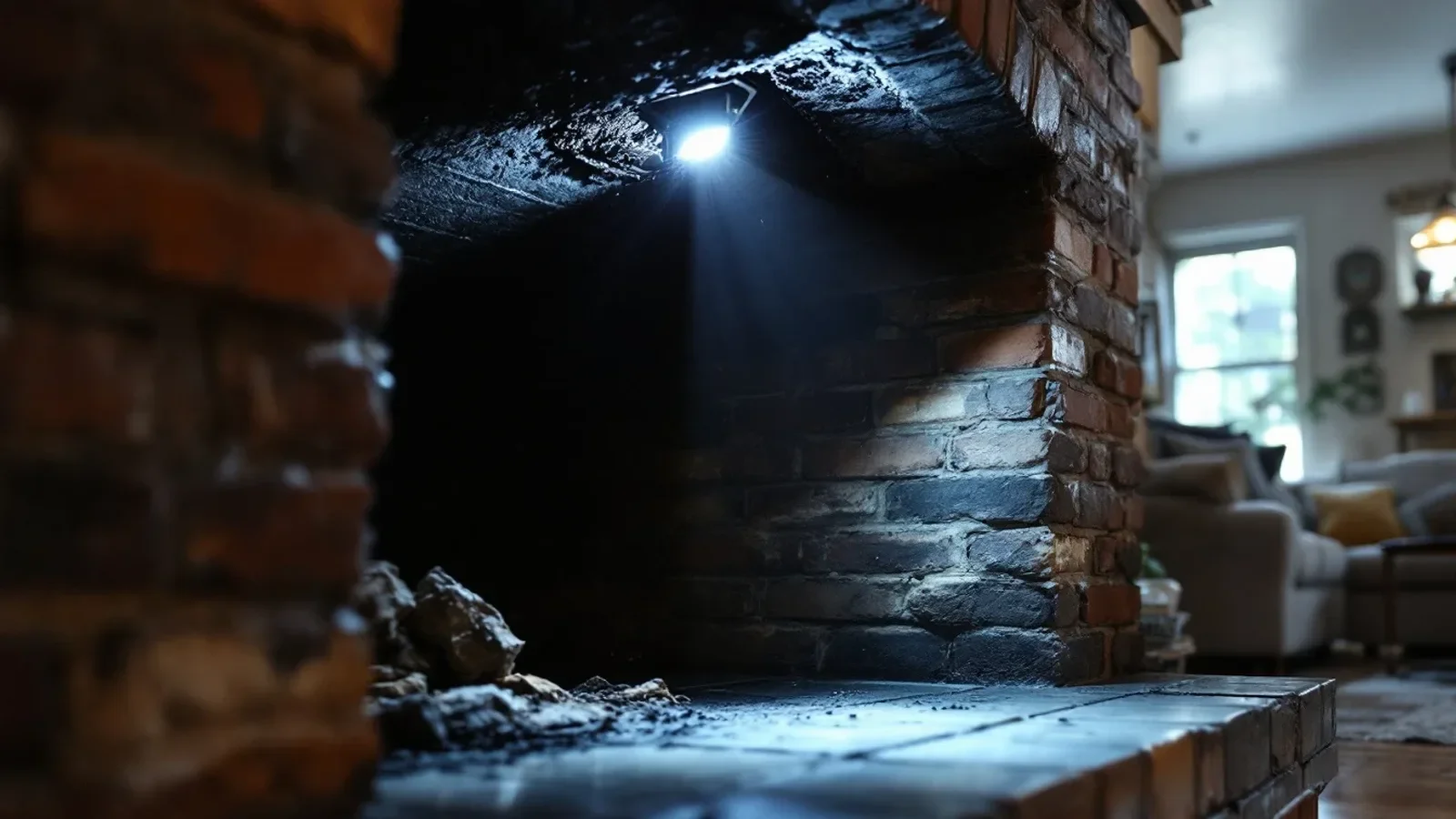
Reality: The most dangerous creosote deposits form well above the firebox throat, in the middle and upper sections of the flue where temperatures drop and gases condense. Peering up from the firebox opening with a flashlight gives you a view of perhaps the first foot or two of the smoke chamber, but it tells you almost nothing about conditions in the flue liner itself. Stage 3 creosote, the dense, glazed form that is most difficult to remove and most likely to ignite, often coats the upper flue walls while the lower section looks relatively clear. A proper assessment requires a camera inspection or a direct look from the roof with the right equipment. If you want to understand the difference between what a homeowner can reasonably check and what requires a trained eye, this comparison of DIY versus professional fireplace cleaning lays it out clearly.
If you want it handled correctly the first time, consider professional chimney cleaning in Sunnyvale.
Myth: A Strong, Unpleasant Odor Means You Have a Creosote Problem, But No Smell Means You Are Fine
Reality: Odor is one signal, but its absence is not reassurance. Creosote does produce a distinctive smell, often described as a sharp, acrid, or tar-like odor, that can intensify in warm, humid weather or when the air pressure draws flue gases back down into the living space. During Sunnyvale’s warmer months, homeowners sometimes notice this smell and correctly connect it to their unused fireplace. However, thick, hardened Stage 3 creosote can be relatively odor-neutral under certain conditions, particularly if the chimney cap and damper are sealing well. Relying on smell alone to judge flue safety means you may be missing the most hazardous type of deposit entirely. Odor is a reason to call for an inspection; no odor is not a reason to skip one.
Myth: Creosote Buildup Is Only Dangerous If It Catches Fire
Reality: A chimney fire is the most dramatic consequence of heavy creosote accumulation, but it is not the only one. Even deposits that never ignite can cause serious problems. Creosote is hygroscopic, meaning it absorbs moisture, and over time it can accelerate the deterioration of flue liners, mortar joints, and masonry. In Sunnyvale’s older housing stock, which includes many homes built in the 1950s and 1960s with original clay tile liners, that kind of chemical degradation can compromise structural integrity without any fire ever occurring. Additionally, a partially blocked flue reduces draft, which means combustion gases including carbon monoxide can back-draft into the living space. The hazard is not limited to flames; it includes long-term structural damage and indoor air quality concerns that develop gradually and silently.
Myth: Annual Cleaning Is Overkill for a Fireplace Used Only a Few Times a Year
Reality: Frequency of cleaning should be based on the condition of the flue, not a fixed calendar assumption. The National Fire Protection Association’s standard NFPA 211 recommends that chimneys be inspected at least once a year and cleaned whenever deposits warrant it. For a Sunnyvale household burning wood only a few evenings per season, that might mean cleaning is needed every two or three years rather than annually, but it also might mean annual cleaning is exactly right, depending on the wood burned, the burn habits, and the flue geometry. Wet or unseasoned wood, low-temperature smoldering fires, and older flues with rough interior surfaces all accelerate buildup. The only way to know the actual interval your fireplace needs is to have it inspected by someone who can see what is inside. Skipping inspections because use seems light is how minor accumulation becomes a serious hazard over several seasons.
Myth: Black Staining Around the Firebox Opening Means Creosote Is Escaping Into the Room
Many Sunnyvale homeowners rely on expert chimney cleaning in Sunnyvale for exactly this.
Reality: Black staining on the face of the firebox or on the surrounding hearth is more often a sign of poor draft or incomplete combustion than direct creosote seepage. Draft problems, which can stem from a closed or partially open damper, a blocked flue cap, or a flue that is undersized for the firebox opening, cause smoke to spill into the room before it enters the flue. That smoke deposits soot on the firebox surround. While soot and creosote are related byproducts of combustion, the visible staining you see on the outside is not the same as the dangerous glazed deposits forming inside the flue. Staining is a useful warning sign that something is wrong with your system, but it points to a draft or combustion issue that needs diagnosis rather than simply confirming where the creosote is. A thorough professional chimney sweep service addresses both the visible staining and the underlying cause.
Myth: Gas Fireplaces Do Not Produce Creosote, So They Never Need Cleaning
Reality: Gas fireplaces do not produce creosote in the way wood-burning units do, because natural gas combustion does not generate the same unburned organic compounds. However, this does not mean a gas fireplace flue is maintenance-free. Gas combustion produces moisture and carbon dioxide, and over time the flue can accumulate debris from outside sources: bird nests, leaf matter, spider webs, and deteriorating liner material. A blocked or degraded gas flue can cause carbon monoxide to back-draft into the home. In Sunnyvale, where homes often have mature trees nearby and where the mild climate makes flue openings attractive nesting spots for birds and insects, annual inspection of gas fireplace venting is genuinely important. The cleaning process differs from wood-burning service, but the need for periodic professional attention does not go away simply because the fuel source changed.
Myth: You Can Remove Creosote Yourself With Chimney Cleaning Logs or Sprays
Reality: Chimney cleaning logs and chemical treatments are marketed as convenient alternatives to professional service, and they do have a limited role: certain chemical treatments can help make Stage 1 creosote more brittle and easier to brush out during a subsequent professional cleaning. What they cannot do is replace that professional cleaning. They do not physically remove deposits from the flue, they have no meaningful effect on Stage 2 or Stage 3 creosote, and they provide no information about the structural condition of the liner, the damper, the cap, or the smoke chamber. Using a cleaning log and then assuming the flue is safe is a common pattern that leads to deferred maintenance. For a realistic look at what homeowners can safely handle themselves versus what genuinely requires professional tools and training, see our breakdown of DIY fireplace maintenance limits. And when you are ready to choose a qualified technician, our guide to selecting a chimney sweep in Sunnyvale covers the credentials and questions worth asking.
Frequently Asked Questions
What does creosote actually look like inside a flue?
Creosote appears in three forms depending on how it has deposited and aged. Stage 1 is a light, flaky, gray or black powder that brushes away easily. Stage 2 is a harder, crunchy, tar-like layer that requires more aggressive brushing. Stage 3 is a dense, shiny, glazed coating that bonds tightly to the flue liner and requires specialized chemical treatments or professional equipment to address safely. Most homeowners cannot see beyond the first few inches of their flue without a camera or inspection mirror, so a visual check from below rarely reveals the full picture.
Ready for the next step? Learn how chimney cleaning services in Sunnyvale can help and reach out to the team.
How do I know if I have Stage 3 creosote without calling someone?
There is no reliable way to confirm Stage 3 creosote without a proper flue inspection, because the deposits form in the upper sections of the flue that are not visible from the firebox. Signs that suggest advanced buildup include a noticeably reduced draft even when the damper is fully open, a strong tar-like odor during warm or humid weather, and a history of infrequent or low-temperature fires over multiple seasons without any professional cleaning. If any of those conditions apply, scheduling an inspection is the appropriate next step rather than trying to assess the flue yourself.
Is creosote buildup more of a problem in older Sunnyvale homes?
Older homes often have clay tile flue liners that develop small cracks and rough surfaces over time, and those imperfections give creosote more surface area to adhere to. Many Sunnyvale homes built before the 1980s also have larger, open-masonry fireplaces designed for a style of burning that is less common today, and the mismatch between flue size and modern burn habits can contribute to poor draft and faster accumulation. That said, creosote is a chemistry problem, not strictly an age problem; a newer prefabricated fireplace used with wet wood and low-temperature fires can accumulate deposits just as quickly.
Can creosote buildup cause a smell even when the fireplace is not in use?
Yes, and this is one of the more reliable home-detectable signs. During warm weather or when indoor air pressure is lower than outdoor pressure, the chimney can draw outside air down through the flue and into the living space. That air carries creosote odors with it, producing a sharp, smoky, or tar-like smell in the room even though no fire has burned in months. If you notice this during Sunnyvale’s warmer months, it is a useful prompt to schedule an inspection before the next burning season begins.
How soon before winter should I schedule a chimney cleaning in Sunnyvale?
Late summer or early fall, roughly August through October, tends to be the best window. Scheduling before the seasonal demand increases means shorter wait times and gives you time to address any repairs identified during the inspection before you need the fireplace. Sunnyvale’s cool season typically runs from November through February, so a September inspection leaves a comfortable margin. For a broader look at what that seasonal preparation involves, the Sunnyvale chimney cleaning and winter prep guide covers the full process from inspection through first use.
Knowing the Signs Is Only Half the Job
Understanding what creosote is, how it forms, and what warning signs to watch for puts you in a much stronger position than the homeowner who simply assumes a rarely-used fireplace is a safe one. The myths covered here are genuinely common in Sunnyvale precisely because the mild climate makes fireplace use feel casual and low-stakes. But the physics of combustion and flue deposits do not change based on how often you light a fire; they respond to burn habits, wood quality, flue condition, and time.
If any of the warning signs in this article sound familiar, or if you simply cannot remember the last time your chimney was inspected, that is the information you need to act on. Nation Wide Chimney Sweep and Repair serves Sunnyvale homeowners with thorough inspections and professional cleaning that addresses deposits at every stage, not just what is visible from the firebox. Reach out to schedule your inspection before the busy season, and go into winter knowing your fireplace has been properly evaluated by someone who has actually seen inside it.