Types of Creosote in Chimney: Sunnyvale Identification Guide
How do you know if your fireplace is safe to light? Homeowners in Sunnyvale, California, often overlook what is building up inside their flues until draft issues or unusual odors occur. Creosote, a natural byproduct of burning wood, accumulates on the interior walls of your venting system and presents a serious fire hazard. Understanding the different types of creosote in chimney systems allows you to assess the safety of your hearth and determine when professional intervention is required to protect your home.
Stage 1 Creosote: Velvet Soot and High Dust Accumulation
First-stage creosote is the easiest form of buildup to address, but it serves as an early warning sign that combustion conditions are not entirely efficient. This material forms when wood smoke cools rapidly as it ascends the flue, leaving behind a dusty, fine deposit.
- Identify the texture by looking for a dry, powdery, or velvety black soot coating the interior damper and lower flue tile surfaces.
- Recognize the combustion cause, which typically involves burning seasoned firewood with a high volume of unrestricted airflow, allowing particles to settle gently.
- Assess the safety risk as low in its immediate state, though it acts as highly flammable kindling that can accelerate the transition to more dangerous stages if left uncleaned.
- Utilize standard brush sweeping techniques to easily brush this layer away from masonry or metal liners without causing structural wear.
Stage 2 Creosote: Crunchy, Flaky Carbon Deposits
As draft patterns fluctuate and airflow remains restricted, Stage 1 deposits transform. Stage 2 creosote presents a more complex cleaning challenge and signals that your fireplace is not venting at peak efficiency.
If you want it handled correctly the first time, consider professional chimney cleaning in Sunnyvale.
- Identify the texture by looking for dark, shiny, or matte black flakes that resemble charred cornflakes or crusted volcanic rock clinging to the flue walls.
- Recognize the combustion cause, which often stems from restricted airflow, burning softwoods, or operating a fireplace insert with a partially closed damper.
- Assess the safety risk as moderate to high, as these flakes contain concentrated tar oil that easily ignites under high temperatures, creating localized chimney fires.
- Utilize specialized rotary loop systems or heavy-duty scraper brushes, as simple hand-sweeping is rarely sufficient to dislodge these hardened deposits.
- Consult a professional to investigate if these deposits are contributing to localized drafts, which can be cross-referenced in our guide on causes of fireplace odors in Sunnyvale.
Stage 3 Creosote: Glazed, Tar-Like Structural Threat
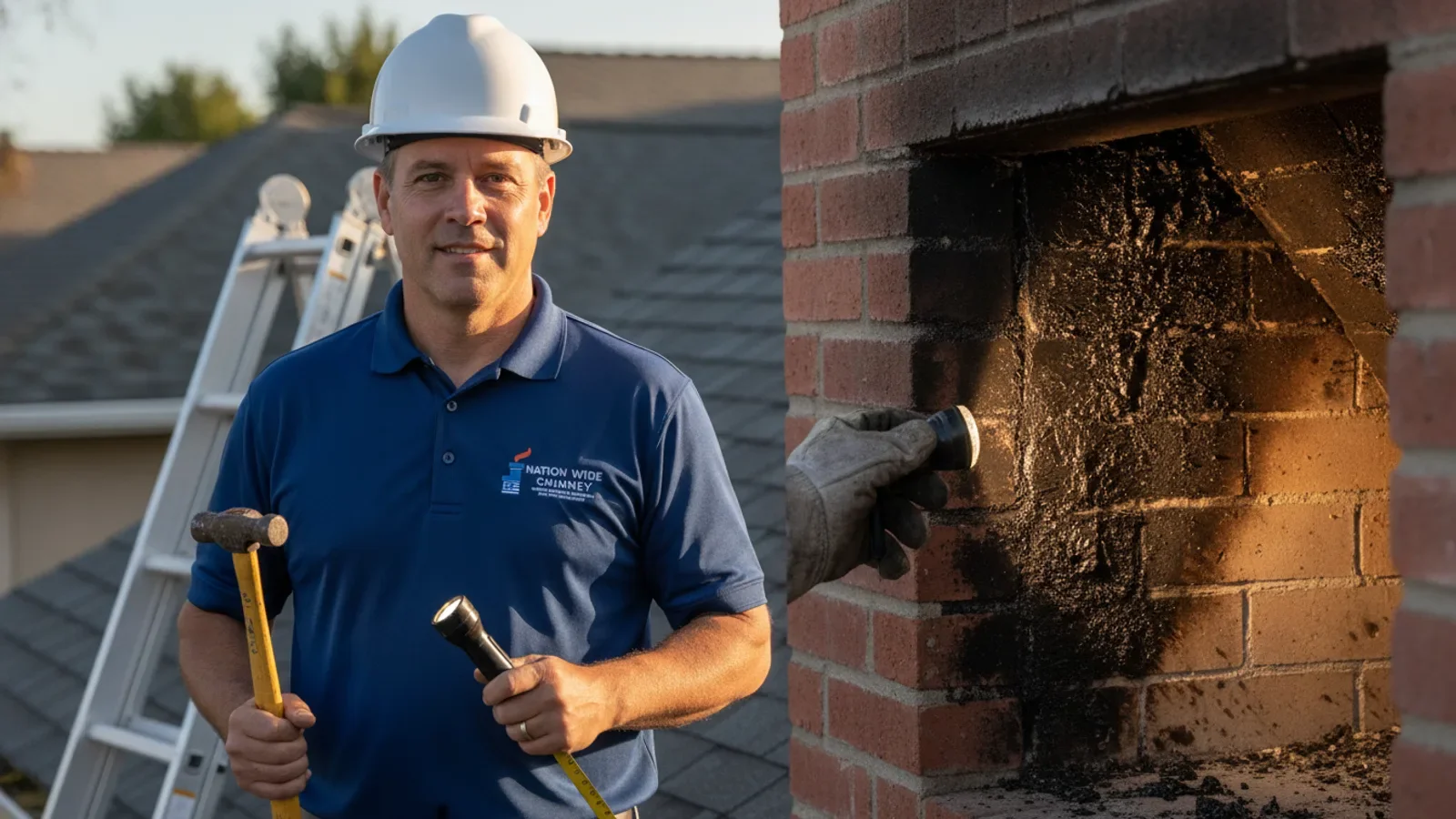
Stage 3 creosote is the most dangerous form of flue buildup. It represents a highly concentrated, solidified fuel source that coats the inside of your chimney like hardened road tar, presenting an imminent fire risk.
- Identify the texture by looking for a thick, glassy, smooth, or dripping black glaze that hardens into a dense, solid sheet along the chimney liner.
- Recognize the combustion cause, which occurs when wet, unseasoned wood is burned in a cold flue, or when the chimney is oversized for the heating appliance, causing smoke to condense into liquid tar before it can escape.
- Assess the safety risk as extremely severe, as this glaze can easily ignite and burn at temperatures exceeding 2,000 degrees Fahrenheit, capable of melting metal liners and cracking masonry.
- Acknowledge that traditional sweeping brushes are completely ineffective against this hardened glaze, which requires specialized chemical treatments or mechanical peeling tools to safely remove.
- Recognize when to halt fireplace use immediately and arrange for professional remediation, as detailed in our comprehensive guide on identifying dangerous flue buildup and safety signs.
Sunnyvale-Specific Chimney and Climate Considerations
The local environment in Sunnyvale, California, plays a significant role in how creosote behaves within your venting system. From our mild Mediterranean climate to the architectural characteristics of homes in Santa Clara County, several regional factors influence flue health.
Many Sunnyvale homeowners rely on expert chimney cleaning in Sunnyvale for exactly this.
- Monitor the impact of burning local woods like coastal live oak or eucalyptus, which produce high heat but can deposit thick, sticky residues if not seasoned for at least a full year in our dry summer months.
- Account for the high humidity and coastal morning fog typical of the South Bay, which introduces moisture into open chimneys, causing dry soot to clump together and rapidly accelerate into glazed Stage 3 creosote.
- Inspect the older masonry flues common in mid-century Sunnyvale ranch homes, which often feature unlined clay tiles that cool down quickly and encourage smoke condensation.
- Ensure your fireplace compliance aligns with the Bay Area Air Quality Management District (BAAQMD) Winter Spare the Air alerts, as burning wood on restricted days leads to intermittent fire usage that cools the chimney and increases tar condensation.
- Evaluate the integrity of your chimney structure alongside creosote assessments by utilizing the Sunnyvale chimney safety inspection checklist to verify overall flue stability.
Frequently Asked Questions
How can I tell what stage of creosote is in my chimney?
You can perform a basic visual check by shining a bright flashlight up into your flue and using a fireplace poker to gently scratch the surface of the buildup. Dusty, easily scratched black powder indicates Stage 1; crunchy, hard flakes indicate Stage 2; while a hard, shiny, unscratchable black glaze indicates Stage 3.
Can I burn a creosote sweeping log to clean Stage 3 glaze?
Creosote sweeping logs contain chemical additives that can help dry out and loosen flaky Stage 2 deposits over time, but they do not replace a physical sweep. They are generally ineffective at safely removing thick, glazed Stage 3 creosote, which requires professional mechanical removal to ensure fire safety.
How often should Sunnyvale homeowners have their chimney inspected for creosote?
Even with occasional fireplace use, you should have your chimney inspected at least once a year to check for animal nesting, moisture damage, and creosote accumulation. Regular maintenance ensures that minor Stage 1 deposits are cleared before they transform into hazardous, glaze-like obstructions.
Recognizing the different stages of creosote buildup is the first step toward maintaining a safe, efficient home fireplace. If you suspect your flue has developed hardened flakes or a glazed coating, protect your property by scheduling a professional chimney cleaning and safety assessment with our certified team today.