Open any garage in Sunnyvale and you will find careful collections of tools, from bike wrenches to garden pruners. For homeowners who like to take charge of basic fireplace care, the idea of assembling a chimney cleaning kit is a natural extension of that do‑it‑yourself spirit. But a proper kit is more than a brush and a hope. It is a thoughtful set of tools and protective gear chosen to match the homes we live in, the microclimate we enjoy, and the safety standards that keep roof work calm and predictable. Whether you plan to handle small tasks between professional visits or you simply want to understand what a pro carries, it helps to picture what thorough chimney cleaning demands in our part of the South Bay.
I have seen kits that start strong and fall short at the moment of truth. The difference between a tidy project and a messy one often lies in the setup: the right drop cloths, containment methods that keep soot corralled, and rods that do not kink when you need them to bend. Then there is the safety side of the kit—the harness, the footwear, the ladder pads—that separates a confident climb from a risky scramble. In a city of low‑slung ranch homes and taller remodels, that safety margin matters more than any single fancy tool.
The heart of the kit: brushes and rods that actually fit
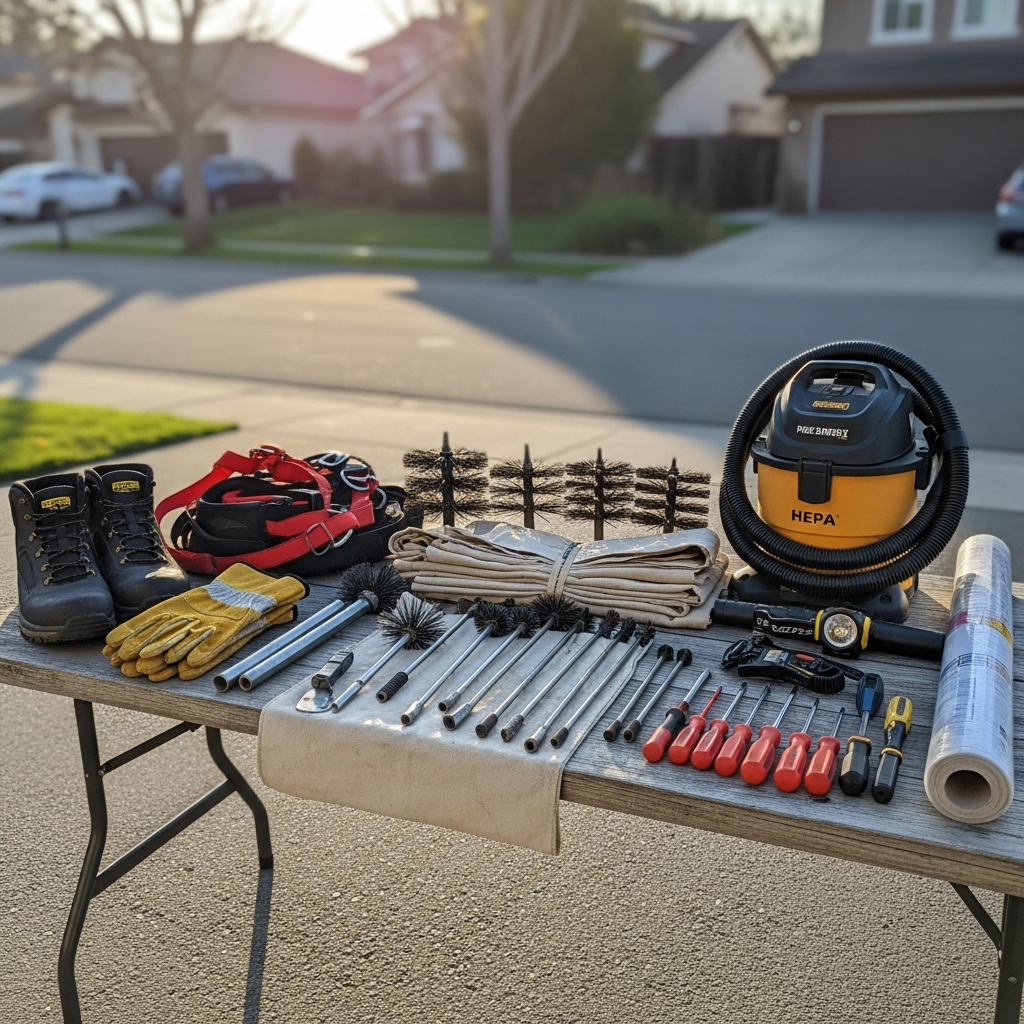
No kit is complete without brushes sized to your flue and rods that navigate its path. For clay‑lined masonry, a firm brush sized to make full, even contact is the workhorse. For stainless steel liners—common in remodeled Sunnyvale homes—a poly brush protects the metal while still lifting residue. Factory‑built chimneys call for heads designed to respect their engineered components. The key is fit: a brush that is too small rides the center and leaves edges dirty; one that is too big binds and risks damage. A good kit often includes two sizes to account for slight variations and wear over time.
Rods deserve equal attention. Flexible sections help around offsets, while stiffer sections transmit power in straight runs. Quick‑connect fittings that resist uncoupling under torque are a quiet hero, preventing the heart‑sinking moment when a head separates mid‑flue. A small wrench or the correct hand‑tightening technique belongs in your kit just as much as the rods themselves.
Containment and cleanup: what keeps the living room clean
Sunnyvale homes often feature open floor plans, and that airy feel can become a liability if soot drifts during a sweep. The kit that respects your home includes clean drop cloths, painter’s plastic for strategic sealing, and tape that releases without pulling paint. Add a light, portable vacuum with proper filtration designed to handle fine particles. Household vacuums tend to blow soot right back into the room; a unit intended for fireplace work traps the fine dust so it does not circulate. A small brush and pan for the hearth, microfiber cloths for final touch‑ups, and a dedicated storage bag keep everything clean and separate from the rest of your garage.
Lighting and visibility tools round out the interior side of the kit. A bright headlamp, a compact flashlight, and a small inspection mirror let you confirm progress as you go. For homeowners who like gadgets, an entry‑level inspection camera can help you see around corners, though it is not a substitute for a pro’s trained eye. The point is to verify, not to guess, and good visibility is the difference between thinking the job is done and knowing it is.
Safety gear that earns its place
A Sunnyvale‑ready kit takes roof work seriously. Non‑slip footwear with clean soles, a properly rated harness and lanyard if you will be near an edge, and a ladder with stabilizers and pads protect you and the roof. Gloves that let you feel the rods without tearing, safety glasses, and a dust mask rated for fine particles belong in the kit by default. If you have ever brushed a flue on a breezy afternoon, you know that fine soot can ride the air and surprise you; simple, consistent protection keeps the work routine.
Indoors, protect your lungs and eyes with the same discipline. Even when you seal carefully, tiny particles can escape. A comfortable, well‑fitting mask and glasses turn an unpleasant surprise into a non‑event. Add knee pads if you will spend time at the hearth. It may sound like overkill until you have done the job without them.
Tools for the realities of Sunnyvale homes
Our city’s remodeling culture means fireplaces and stoves are often nestled among upgrades like tight windows and powerful range hoods. Your kit should account for home systems that influence draft. A simple smoke pencil or incense stick can help you read air movement near the hearth when you test after cleaning. If smoke lingers, you may need to open a nearby window briefly during lighting, and you will know that not because of a hunch but because you measured the air.
Exterior details matter as well. Add a basic toolkit with a screwdriver set, a small adjustable wrench, and a nut driver for cap fasteners. A soft brush for cap screens and a gentle cleaner for stubborn residue will keep screens from clogging. If birds take an interest in spring, a properly sized screen cap installed correctly is your best defense, and your kit should have what you need to check attachments without over‑tightening.
Planning your process so the kit works as a system
A good kit is more than a pile of gear; it is a sequence. Lay down protection first, establish airflow control, and stage your rods so you do not step over them in tight spaces. On the roof, set the ladder carefully, secure yourself, and confirm you have room to work without bumping solar panels or vent stacks. Make your first pass with the brush sized for the majority of the flue, then switch to a second size if needed for tighter sections. Indoors, vacuum gently around the firebox without stirring settled ash into the room, and finish with a check of the smoke chamber and damper area so you do not miss the spots where residue likes to hide.
For inserts and stoves common in Sunnyvale remodels, adapt the sequence to allow for careful disassembly. Your kit should include a labeled container or small bags for screws so you can reassemble confidently. A soft brush for baffles and a tool to reach narrow channels keep things tidy. Then, as always, verify your work with a light and mirror before calling it done.
When a homeowner’s kit should give way to a pro’s toolkit
There is a moment when persistence becomes counterproductive. If you encounter sticky, shiny deposits that resist normal brushing, if a brush binds at the same spot and you cannot diagnose why, or if roof conditions feel even slightly uncertain, pause. The wise move is to clean up and invite professional help. Experienced technicians bring specialty heads for glazed deposits, cameras that reveal what you cannot see, and the practiced feel that replaces trial and error with steady progress. A homeowner’s kit is excellent for maintenance and understanding; a professional kit shines when the job needs nuance or when safety margins narrow.
In practice, many Sunnyvale homeowners strike a balance. They handle light, accessible tasks and schedule visits that restore the system to a baseline of cleanliness and safety. That cooperative approach keeps fires enjoyable and maintenance predictable without turning weekends into roof work marathons.
FAQs about assembling and using a chimney cleaning kit
What is the single most important piece of a kit?
Correctly sized brushes paired with appropriate rods are the heart of the kit. If the brush does not make even contact, the job will never be fully successful, regardless of how many accessories you own.
Do I need different brushes for different seasons?
Not different seasons so much as different deposit types. After damp spells and short fires, slightly firmer bristles can help lift tacky residue. After longer, hotter burns that leave powdery soot, a gentler poly brush can be ideal, especially in metal liners.
Can I rely on my regular vacuum?
Household vacuums struggle with fine soot and can exhaust it back into the room. A vacuum with proper filtration for fireplace work is the better choice and keeps a light cleaning from turning into a living room dust storm.
How do I protect my roof while working?
Use ladder pads, place ladders carefully, wear clean, non‑slip footwear, and avoid working when surfaces are damp. If you are unsure about footing, it is better to reschedule than to push on. Roof safety is non‑negotiable.
What if I find a bird nest or evidence of animals?
Stop and consult a professional. Removals must be done responsibly and sometimes seasonally to comply with protections for wildlife. A pro can handle the situation safely and advise on screen caps to prevent a repeat.
If you like the idea of a clean, reliable fireplace without guesswork, consider pairing your well‑chosen kit with help from a team that understands Sunnyvale homes inside and out. A short consultation about your flue type, roof access, and living space layout can save hours and keep soot firmly where it belongs—out of your home and away from air you breathe.
When you are ready for a smooth, safety‑first appointment or simply want to confirm that your kit matches your chimney, schedule trusted chimney cleaning and enjoy the comfort that comes from a well‑tuned hearth.