Sunnyvale Chimney Sweep and Repair Services: The Complete Property Owner’s Guide
Sunnyvale homeowners enjoy mild winters, but when the evening chill rolls in from the San Francisco Bay, nothing beats the comfort of a crackling fireplace. However, many local property owners overlook the venting systems that keep these fires safe. Operating a fireplace with soot buildup or structural damage poses serious safety risks to your household. Nation Wide Chimney Sweep & Repair provides professional fireplace maintenance, soot removal, and structural masonry work to keep Sunnyvale homes safe and efficient. This comprehensive guide covers everything you need to know about maintaining your home\’s venting system, from seasonal cleanings to complex masonry restorations.
Clean Chimneys Do Not Catch Fire: The Reality of Creosote
Many homeowners believe that if they only burn wood occasionally, their fireplace does not require regular attention. In reality, every wood-burning cycle leaves behind a highly flammable byproduct known as creosote. Over time, this substance solidifies and creates a significant fire hazard inside your flue.
Understanding the Three Stages of Creosote
Creosote develops in three distinct phases, each more dangerous and difficult to remove than the last:
- Stage 1 (Velvety Soot): A dusty, flaky black coating that is relatively easy to brush away during a routine chimney sweep.
- Stage 2 (Crunchy Flakes): A thicker, bubbly deposit that resembles hardened tar. It contains high concentrations of flammable oils and requires specialized scraping tools to clear.
- Stage 3 (Glazed Creosote): A thick, glassy, dark coating that hardens onto the flue liner. This stage is extremely combustible, can restrict airflow, and often requires chemical treatments or specialized rotary loops to remove safely.
How Burning Wet Wood Accelerates Buildup
Burning unseasoned or damp wood is the leading cause of rapid creosote accumulation in Sunnyvale homes. When wood contains high moisture levels, the fire spends its energy evaporating water rather than producing heat. This results in cooler smoke, which condenses quickly on the cold flue walls to form heavy creosote deposits. To minimize this issue, only burn firewood that has been split and dried for at least six months.
The Role of Airflow and Flue Dimensions
Proper draft is essential for a clean burn. If your flue is improperly sized for your fireplace opening, or if the damper is partially closed, smoke lingers in the chamber. The longer smoke remains in the flue, the cooler it gets, leading to faster condensation and soot buildup. Regular professional diagnostics can help identify these drafting issues before they become safety hazards.
Why Localized Climate Factors Matter for Sunnyvale Masonry
While Sunnyvale, CA does not experience the harsh sub-zero temperatures of northern climates, our coastal-influenced weather presents unique challenges for brick and mortar structures. Local home maintenance requires an understanding of how regional environmental factors affect masonry durability.
The Impact of Microclimates and Bay Area Humidity
The Santa Clara Valley experiences moderate winter rainfall and high morning humidity from the bay. Brick is a naturally porous material that acts like a sponge, absorbing this moisture. When daytime sun heats the damp brick, it causes internal moisture pressure. Over time, this continuous wet-and-dry cycle weakens the structural integrity of the mortar joints and causes the brick faces to flake off, a process known as spalling.
Earthquake Stress and Micro-Fissures
Sunnyvale sits near active fault zones, meaning minor seismic activity and ground vibrations are common. While these micro-tremors might go unnoticed by residents, they subject masonry structures to continuous, subtle stress. This movement frequently causes tiny micro-fissures in the crown, mortar joints, and clay flue liners, which can expand over time and allow toxic gases to seep into your living spaces.
Preventing Vegetation and Ivy Damage
The lush climate of Sunnyvale encourages ivy and other climbing vines to grow along exterior walls. While this may look charming, vine roots travel deep into aging mortar joints. As the roots grow, they pry the mortar apart, allowing rainwater to penetrate the brickwork and cause hidden rot inside the wall cavity.
The Anatomy of a Professional Chimney Cleaning
A professional cleaning is not a messy, dusty chore that leaves soot all over your living room. When performed by trained professionals, the process is clean, systematic, and highly detailed, ensuring your home remains spotless throughout the service.
The Importance of Dust Containment and HEPA Filtration
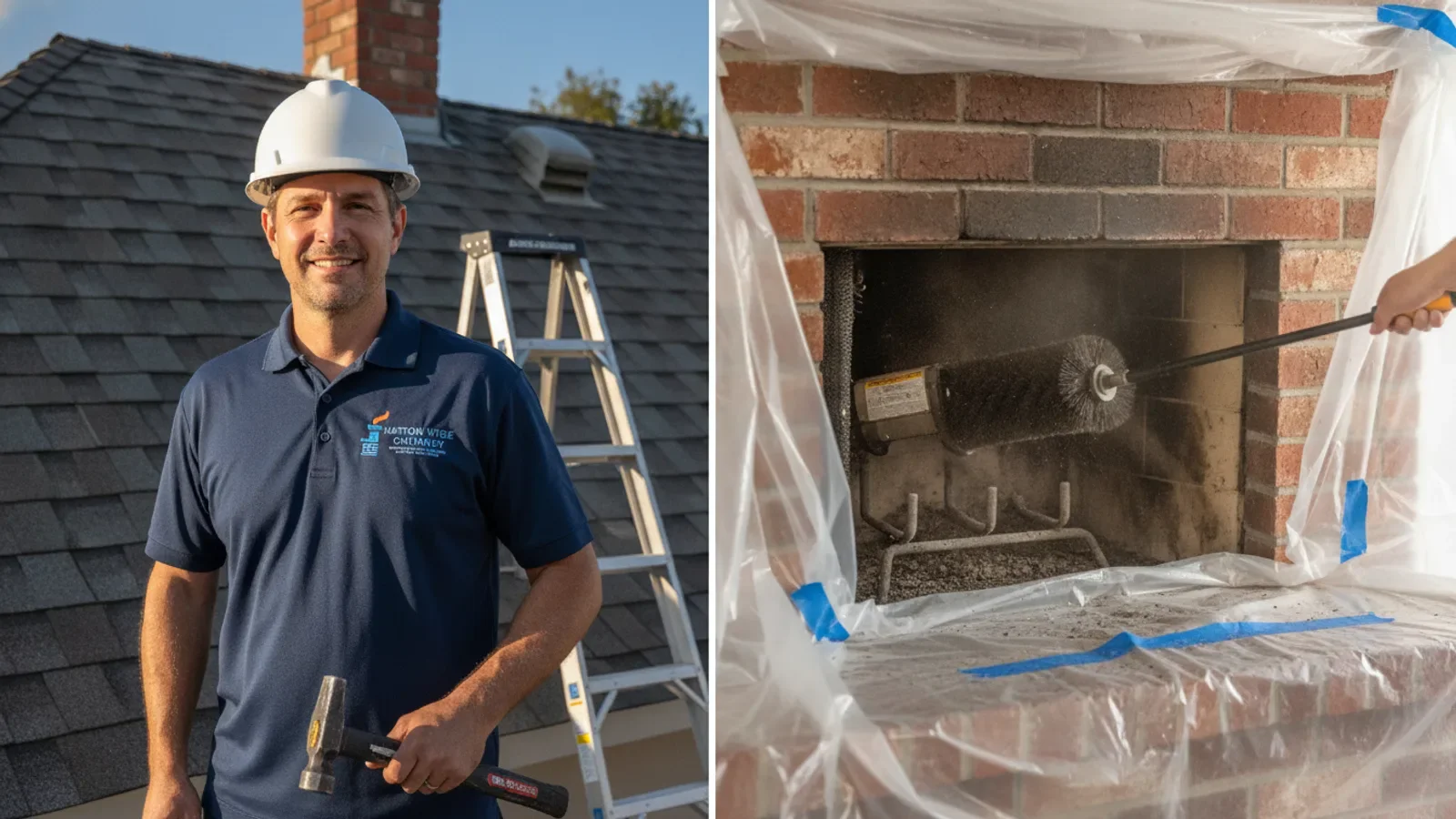
Before any sweeping begins, technicians set up a strict containment area. This involves laying down protective drop cloths in front of the hearth and sealing the fireplace opening with heavy-duty plastic sheeting. A specialized, high-vacuum system equipped with a HEPA filter is connected to the fireplace to establish negative pressure. This ensures that every speck of dislodged soot and dust is instantly captured and contained, keeping your indoor air clean.
Mechanical Sweeping Methods
With the containment system running, the technician uses specialized polypropylene or steel wire brushes attached to flexible, motorized rods. These rods are guided up through the flue to scrub the inner walls from bottom to top. For stubborn stage 3 creosote, technicians may use rotary cleaning heads equipped with chains or heavy cables to safely break loose the glazed deposits without damaging the underlying flue tiles.
The Multi-Point Visual Inspection
A thorough chimney cleaning is always accompanied by a detailed visual inspection. Technicians use high-powered lights and specialized cameras to examine the fireplace damper, smoke shelf, firebox bricks, and the exterior structure. This inspection identifies hidden cracks, water penetration points, or clearance issues that could pose a fire or carbon monoxide hazard if left unaddressed.
| Component | Primary Function | Common Signs of Wear or Damage |
|---|---|---|
| Flue Liner | Vents toxic combustion gases safely out of the home. | Cracked clay tiles, flaking pieces on the hearth, gaps in joints. |
| Damper | Seals the flue when the fireplace is not in use to prevent drafts. | Rusting, difficulty opening or closing, warped metal plate. |
| Chimney Cap | Keeps out rain, birds, debris, and acts as a spark arrestor. | Missing mesh, rusted lid, loose mounting brackets. |
| Crown | Concrete slab at the top that sheds water away from the masonry. | Hairline cracks, deep fissures, missing chunks of concrete. |
Crucial Masonry Repairs: Preserving Structural Integrity
When moisture, seismic shifts, or age cause damage to your fireplace structure, timely repair work is essential to prevent a complete rebuild. Addressing these issues early protects your investment and ensures your fireplace remains safe to operate.
The Art and Science of Tuckpointing
When mortar joints between bricks begin to crumble, water can seep into the structure. Tuckpointing is the precise process of scraping out the decayed mortar to a consistent depth and replacing it with fresh mortar. It requires matching the strength and composition of the existing mortar to prevent cracking under thermal expansion, restoring both the strength and appearance of the wall.
Firebox Reconstruction and Refractory Mortar
The interior of your fireplace, or firebox, is lined with specialized firebricks designed to withstand extreme heat. However, the mortar holding these bricks together can crack and disintegrate over years of use. For safety, these areas must be repaired using specialized refractory mortar, which is rated to withstand temperatures exceeding 2,000 degrees Fahrenheit, ensuring fire and intense heat cannot reach the wooden framing behind the hearth.
Flue Relining and Modern Solutions
An unlined or damaged flue is a major house fire risk. If your clay tile liner has cracked over time, a high-quality chimney repair often involves installing a modern stainless steel liner. These liners are durable, improve drafting efficiency, and provide a continuous, seamless path for combustion gases to exit your home without leaking into wall cavities.
Water Damage Prevention: The Outer Defense System
Water is the single greatest enemy of your fireplace structure. Protecting the exterior components of your chimney is crucial for preventing water penetration and avoiding costly structural repairs down the line.
Repairing and Sealing the Concrete Crown
The concrete slab at the very top of your chimney, called the crown, is designed to shed rainwater away from the brick facade. Over time, exposure to the sun and seasonal temperature shifts causes this concrete to crack. If water gets into these cracks, it can leak down inside the brickwork. Applying a flexible, elastomeric crown sealant fills these cracks and creates a waterproof barrier that moves with the structure as temperatures change.
The Importance of a Functional Cap and Spark Arrestor
Leaving the top of your flue wide open is an invitation for trouble. Rainwater can fall directly down the flue, rusting out the metal damper and rotting the firebox mortar. Additionally, local birds, squirrels, and raccoons often try to build nests inside unsealed flues. A stainless steel cap featuring a built-in wire mesh screen keeps out pests and water, while also serving as a spark arrestor to prevent hot embers from landing on your roof.
Applying Professional Water Repellents
Unlike standard sealants that trap moisture inside the brick, professional-grade water repellents are vapor-permeable. These specialized formulas penetrate deep into the brick and mortar to create a hydrophobic barrier that sheds rain, while still allowing the masonry to “breathe.” This prevents trapped moisture from causing spalling and structural damage during warmer weather.
Selecting the Right Chimney Sweep in Sunnyvale
Your fireplace is a major combustion appliance, and hiring an unqualified contractor can put your home at risk. When researching local service providers in Sunnyvale, CA, it is important to verify their qualifications and standards.
Verifying Industry Credentials and Standards
Always ask if the technicians follow industry-standard safety guidelines, such as those established by the National Fire Protection Association (NFPA) 211 standards. Reputable providers will also be fully licensed, bonded, and carry comprehensive liability insurance to protect your property during the service.
The Importance of a Written Diagnostic Report
A reputable professional will not simply tell you that repairs are needed; they will show you. Look for companies that provide a complete, written inspection report, including clear digital photos or video footage of the interior flue. This transparent documentation ensures you understand the exact condition of your system and why specific repairs are being recommended.
Understanding Pricing and Evaluating Quotes
Be cautious of exceptionally low-cost service offers, as these are often used to secure a booking before finding expensive, unneeded repairs once on site. A professional chimney sweep company provides transparent, itemized estimates based on the specific type of fireplace you have, the level of creosote buildup, and the height and accessibility of your roof.
Frequently Asked Questions
How often should I have my chimney cleaned in Sunnyvale?
Safety standards recommend having your venting system inspected at least once a year, regardless of how often you use it. Cleaning should be performed whenever the soot and creosote buildup inside the flue reaches 1/8 of an inch in thickness.
What is the difference between a chimney sweep and an inspection?
A sweep is the physical cleaning process of brushing away soot, ash, and creosote from the flue and firebox. An inspection is a detailed diagnostic evaluation of the entire system\’s structural integrity and safety, often using specialized cameras to check for hidden damage.
Can I sweep my own chimney to save money?
While basic DIY kits are available, sweeping your own flue is not recommended. Professional technicians use specialized HEPA-vacuum containment systems to keep soot out of your home, and they possess the training needed to spot subtle, dangerous defects like cracked flue liners or structural settling.
Why does my fireplace smell bad during the summer?
Summer odors are caused by damp air drawing down through a flue lined with creosote deposits. The humid air mixes with the soot to create a strong, smoky, or asphalt-like smell. A professional cleaning and installing a tight-sealing damper can help resolve this issue.
Conclusion
Regular maintenance is the key to enjoying your fireplace safely and protecting your home from water damage, chimney fires, and structural decay. For reliable, professional care, contact Nation Wide Chimney Sweep & Repair in Sunnyvale, CA. Our team is ready to assist you with everything from routine cleanings to complex masonry restorations. Schedule your chimney sweep and inspection today to keep your home safe and warm.