DIY vs Professional Fireplace Inspection in Sunnyvale, CA: A Homeowner’s Checklist
Most Sunnyvale homeowners assume a quick look inside the firebox tells them everything they need to know. It doesn’t. The parts of a chimney system most likely to cause a house fire or carbon monoxide problem are the ones you simply cannot see from the hearth. This checklist breaks down exactly what you can check yourself, what requires certified equipment, and the specific factors that make Sunnyvale properties worth paying close attention to.
What You Can Realistically Check Yourself
A homeowner visual check has genuine value as a first-pass filter. Run through these items before every burning season and after any significant storm.
- Open the damper fully and shine a flashlight upward, look for obvious daylight blockage, bird nests, or large debris clumps sitting on the smoke shelf.
- Inspect the firebox floor and walls for cracked firebricks or crumbling refractory mortar joints; hairline cracks in the paint-black coating are normal, but gaps wide enough to catch a fingernail are not.
- Run a gloved finger along the lower flue liner walls you can reach; a thin, powdery grey-black residue is Stage 1 creosote and sweepable, but a hard, shiny, tar-like coating signals a more serious buildup.
- Check the damper plate for warping, rust, or a broken handle that prevents a full seal when closed.
- Walk outside and scan the visible chimney crown (the concrete cap at the top) for surface cracking; use binoculars if the roofline is steep.
- Look at the flashing where the chimney meets the roof for lifted edges, missing caulk, or rust staining on the shingles below.
- Confirm the chimney cap screen is intact with no gaps large enough to admit a bird or squirrel.
- Check the mortar joints on the visible exterior courses of brick for gaps, spalling, or white efflorescence staining that signals moisture intrusion.
If any item above raises a flag, stop and schedule a professional inspection before lighting a fire. If everything looks acceptable, you still have not seen the full picture. For a deeper look at what creosote buildup looks and feels like at each stage, see our guide to creosote warning signs.
What a Professional Inspection Actually Covers
A certified chimney sweep brings tools and training that change what is physically visible. The National Fire Protection Association (NFPA 211) defines three inspection levels; a Level 1 covers accessible areas during normal use, a Level 2 adds a video scan of the flue interior, and a Level 3 involves opening structural components. Most Sunnyvale homes need at minimum a Level 2 when buying or selling, after any chimney event, or if the system has not been inspected in several years.
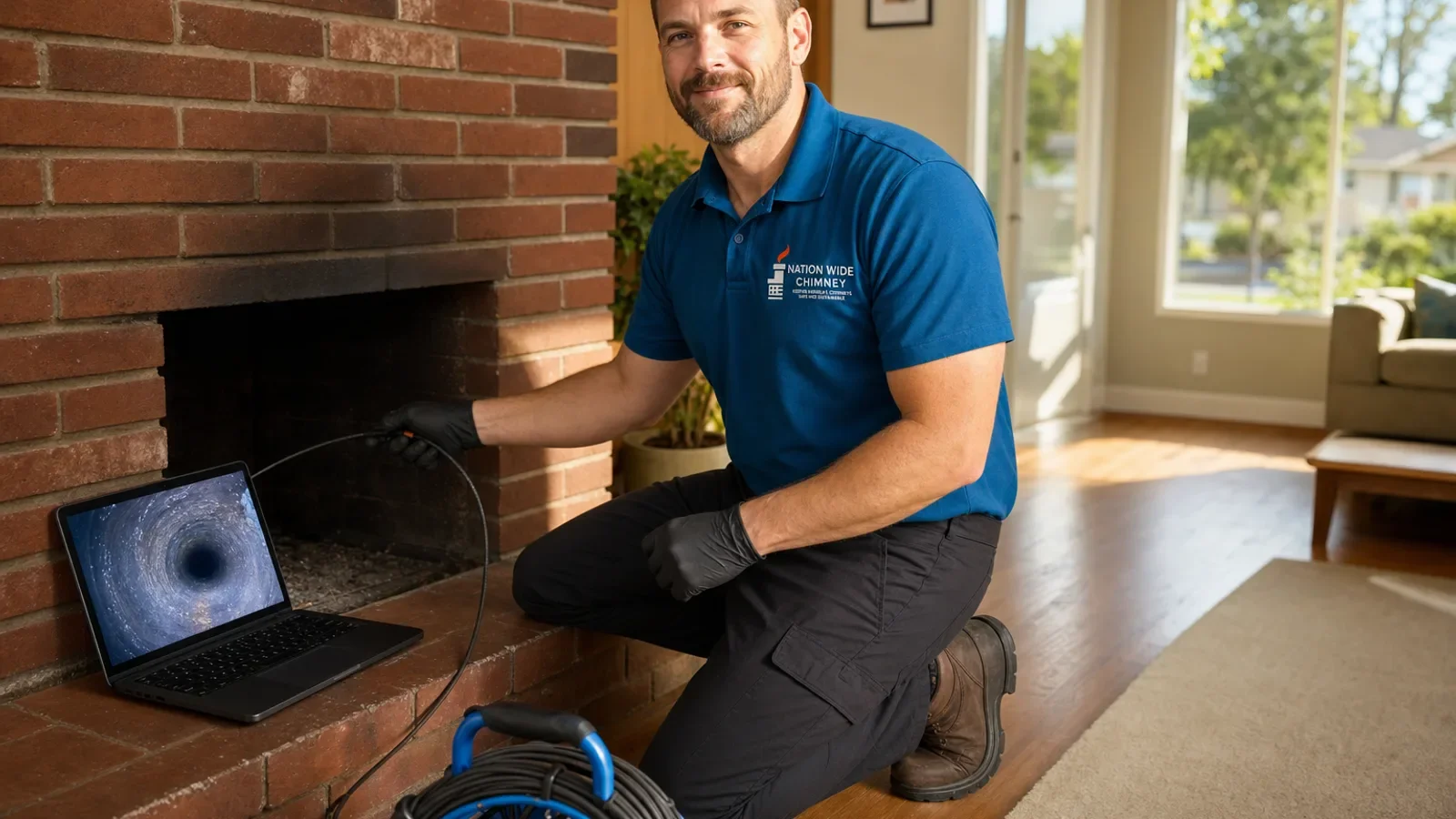
- Insert a high-resolution closed-circuit camera into the flue to document liner condition along the entire height of the chimney, including bends and offsets invisible from below.
- Measure flue liner dimensions and compare them against the appliance or fireplace opening to confirm correct sizing per NFPA 211 requirements.
- Identify liner cracks, spalling tiles, or open mortar joints that allow combustion gases to migrate into wall cavities or attic spaces.
- Assess creosote accumulation by stage and thickness, not just by feel at the accessible lower section.
- Inspect the smoke chamber for corbeled mortar that is crumbling or missing, which disrupts draft and increases back-puffing.
- Evaluate the chimney crown for structural integrity, including hairline cracks that allow water to undercut the cap from the inside.
- Check clearances between the chimney structure and nearby combustibles inside the attic or wall framing, which requires accessing areas beyond the firebox.
- Test carbon monoxide and draft performance under realistic operating conditions if a draft complaint has been reported.
- Provide a written inspection report with photo documentation, a critical record for homeowners, buyers, and insurance purposes.
If you want it handled correctly the first time, consider professional chimney cleaning in Sunnyvale.
The chimney inspection Sunnyvale guide explains what to expect during each level and how to read the written report your technician provides.
Sunnyvale-Specific Considerations for Fireplace Owners
Sunnyvale’s housing stock and climate create a specific set of inspection priorities that differ from colder, higher-use fireplace markets.
- Many Sunnyvale homes were built between the 1950s and 1970s, when single-wythe brick construction was common; these older chimneys often lack a code-compliant clay tile liner and may have never been updated.
- The South Bay’s mild winters mean most fireplaces here burn infrequently, sometimes only a handful of times per season. Low-use systems accumulate moisture damage and animal intrusion faster than creosote, so inspection priorities shift accordingly.
- Santa Clara County occasionally enforces Spare the Air alerts that prohibit wood burning on designated days; a properly functioning gas insert or EPA-certified wood insert is worth documenting during inspection so owners know their compliance options.
- Seismic activity is a genuine local factor. The Bay Area’s proximity to active fault systems means older unreinforced masonry chimneys can develop hidden mortar joint separations after even moderate ground movement; a post-earthquake Level 2 inspection is worth scheduling even if no visible exterior damage appears.
- Sunnyvale’s relatively dry summers allow moisture-related damage to hide until the first rains of fall, when water that entered through a cracked crown or failed flashing suddenly becomes visible as interior staining. Inspect before the rainy season, not after.
- Homes with original gravity-fed gas wall heaters that share a masonry flue with a wood-burning fireplace (a configuration not uncommon in older Sunnyvale neighborhoods) require careful inspection of the shared flue for compatibility and sizing.
- If your home is in a neighborhood that experienced any nearby wildfire smoke events, a professional should check for debris accumulation and assess whether a precautionary cleaning is warranted before the next use.
Checklist: When to Skip the DIY Check and Call a Professional Immediately
Certain conditions move a fireplace from a routine inspection item to an urgent safety matter. Do not light a fire if any of the following apply.
- You smell a persistent smoky or tar-like odor in the house even when the fireplace has not been used recently, which can indicate a liner breach allowing gases to seep into living spaces.
- Smoke backs up into the room during normal operation after the flue has had time to warm up.
- You notice white or rust-colored staining on the interior ceiling or walls near the fireplace, signaling active water intrusion through the chimney structure.
- The property was purchased without a recent Level 2 inspection on record; a prior owner’s word about condition is not a substitute for documented camera evidence.
- Any felt earthquake has occurred since the last professional inspection, regardless of whether visible exterior damage is present.
- A bird, squirrel, or raccoon has entered the flue; animal nesting material is highly combustible and can block the flue entirely.
- The chimney has not been professionally inspected in more than three years, even for a low-use fireplace.
- You are preparing to sell or buy the home; a written Level 2 report protects both parties and is increasingly expected in Santa Clara County real estate transactions.
Many Sunnyvale homeowners rely on expert chimney cleaning in Sunnyvale for exactly this.
When you are ready to move forward, the full chimney sweep and inspection guide walks through exactly what a certified technician does from arrival to written report.
Checklist: Preparing Your Fireplace Before a Professional Visit
A few simple steps help the inspection go faster and give the technician unobstructed access.
- Remove all fire grates, andirons, and glass doors from the firebox opening and set them aside so the technician has clear access to the firebox floor and walls.
- Clear a three-foot radius around the hearth of furniture, rugs, and decorative items; camera equipment and drop cloths need room to work.
- Make sure the attic access hatch is unobstructed if the chimney passes through an attic space, since a Level 2 inspection often includes an attic visual check of chimney clearances.
- Have any previous inspection reports, repair receipts, or appliance manuals ready; knowing the age and model of an insert or gas log set helps the technician assess liner sizing quickly.
- Note any specific complaints you have observed, such as smoke spillage, unusual odors, or sounds inside the flue, and mention them at the start of the visit rather than at the end.
- Avoid using the fireplace for at least 24 hours before the appointment so the firebox and flue are cool enough for safe camera insertion and hands-on inspection.
Once the inspection is complete and any cleaning is done, post-cleaning fireplace care covers the simple steps that keep your system in good condition between professional visits.
Understanding What Drives Inspection and Cleaning Costs
Cost conversations come up quickly once a homeowner starts comparing quotes. A few factors genuinely affect the scope and complexity of the work, and understanding them helps you evaluate what you are being offered.
Ready for the next step? Learn how chimney cleaning services in Sunnyvale can help and reach out to the team.
- Inspection level matters significantly: a Level 1 visual check is a narrower scope than a Level 2 video scan, which is itself less involved than a Level 3 structural assessment. Make sure you know which level is included in any quote.
- Chimney height and roof pitch affect how much time and equipment are required for exterior access; a single-story ranch in a flat Sunnyvale neighborhood is a different job than a two-story home on a steep roofline.
- Creosote stage and accumulation thickness determine how much cleaning work is required; a system with Stage 3 glazed creosote requires specialized chemical treatments beyond a standard brush sweep.
- The number of flues matters; some Sunnyvale homes have a separate flue for a furnace or water heater that shares the same chimney structure and should be inspected at the same time.
- Travel and scheduling factors are real in a dense metro area like the South Bay; a company that serves Sunnyvale regularly will have different overhead than one dispatching from farther away.
For a detailed look at reading and comparing quotes before you book, our quote evaluation checklist covers what line items to look for and what questions to ask.
Frequently Asked Questions
Can I use a smartphone camera on a selfie stick instead of a professional video inspection?
A smartphone can capture the lower few feet of a flue and is useful for a quick visual check of the smoke shelf area. It cannot navigate the full height of the flue, document offset sections, assess liner integrity under consistent lighting, or produce the calibrated photo record that a certified inspection report requires. For any purpose beyond a rough first look, it is not a substitute.
How often should a Sunnyvale fireplace be professionally inspected if we only use it a few times a year?
NFPA 211 recommends annual inspections regardless of use frequency. For low-use Sunnyvale fireplaces, the primary concerns shift from creosote to moisture damage, animal intrusion, and seismic-related mortar movement, all of which can develop between burning seasons without any use at all. An annual check remains the appropriate standard.
Does a gas fireplace or gas insert need the same inspection as a wood-burning system?
Gas appliances produce different combustion byproducts than wood, so creosote is not the concern. However, the flue liner, venting connections, burner components, and gas valve all require periodic inspection to confirm safe operation. A certified technician familiar with gas systems should assess a gas fireplace or insert on at least the same annual schedule as a wood-burning system.
A homeowner visual check is a useful habit, but it covers only the fraction of the chimney system that is accessible without tools or training. For a Sunnyvale home, where older construction, low seasonal use, and seismic exposure all add layers of risk, a professional fireplace inspection is the only way to know the full condition of the system. Schedule yours before the first fire of the season, not after a problem appears.