What Drives Chimney Repair Cost in Sunnyvale, CA, and the Red Flags You Should Never Ignore
Most Sunnyvale homeowners only think about their chimney when something goes wrong. By then, a small maintenance issue has often grown into a significant repair. Understanding what actually drives chimney repair expenses, before you get a quote, helps you ask better questions, spot warning signs early, and avoid surprises on the invoice. This guide breaks down every major cost factor and the red flags that signal a problem is getting worse, not better.
Why Chimney Repair in Sunnyvale Is Different From Other Regions
The Bay Area’s Unique Wear Patterns
Sunnyvale sits in a climate that feels mild on the surface, but it puts specific stress on masonry and metal chimney components. Coastal moisture from the Bay moves inland regularly, and that humidity cycles through brick, mortar, and flashing every week. Unlike regions with hard freezes, the Bay Area rarely gets the dramatic freeze-thaw cracking that devastates chimneys in colder states. What Sunnyvale chimneys get instead is slow, persistent moisture infiltration, often combined with years of deferred maintenance because owners assume the mild weather means nothing is happening.
Older Housing Stock and Its Implications
A significant portion of Sunnyvale’s single-family homes were built between the 1950s and 1980s. Chimneys from that era were often built with softer mortar mixes and thinner liner systems that were acceptable under codes of the time but do not meet current standards. When Nation Wide Chimney Sweep and Repair inspects a chimney in an older Sunnyvale neighborhood, the team frequently finds mortar joints that have eroded well past the point where simple tuck-pointing can solve the problem. Age compounds every other cost factor on this list.
Seismic Activity and Structural Concerns
Northern California’s seismic history is relevant to chimney repair in a way that rarely comes up in national guides. Even minor tremors can shift a chimney’s crown, crack the liner, or separate the flashing from the roofline. A chimney that looks fine from the street may have internal cracks that only a proper chimney inspection in Sunnyvale will reveal. Earthquake-related damage is one of the reasons California building codes have specific requirements around chimney reinforcement, and why a visual-only inspection from the ground is never sufficient.
The Biggest Factors That Raise (or Lower) Your Repair Bill
Type of Damage: Surface vs. Structural
Not all chimney damage costs the same to fix, and the difference between surface-level and structural problems is where quotes can vary dramatically. Surface repairs include things like re-pointing deteriorated mortar joints, patching a cracked crown, or resealing flashing. These are labor-intensive but relatively contained. Structural repairs, a leaning chimney, a collapsed flue liner, or spalling brick that has compromised the chimney’s core, require more material, more time, and sometimes scaffolding or temporary bracing. The single biggest driver of a higher repair bill is discovering that what looked like a surface problem has structural roots.
Liner Condition and Material
The flue liner is the interior channel that contains combustion gases and protects the surrounding masonry from heat and corrosion. Liners can be clay tile, cast-in-place, or stainless steel. Clay tile liners are the most common in older Sunnyvale homes and also the most prone to cracking from heat cycling and seismic movement. When tiles crack, gases can escape into the chimney structure and, in serious cases, into living spaces. Relining a chimney, installing a new stainless steel liner or applying a cast-in-place liner system, is one of the more involved repairs on the list. The length of the flue, the accessibility of the chimney, and the liner material chosen all affect the scope of work.
Accessibility and Height
A chimney on a single-story ranch home is straightforward to access. A chimney on a two-story home with a steep pitch requires additional safety equipment, and that added complexity is reflected in the labor involved. Sunnyvale has a mix of single-story homes and taller properties, and the roof configuration matters as much as the chimney height itself. Technicians working at greater heights spend more time on safety setup and have a smaller working window per visit, which extends the overall job.
Scope of Masonry Repair
Masonry repair in Sunnyvale CA can mean anything from touching up a few eroded mortar joints to rebuilding the top section of a chimney from scratch. Tuck-pointing, the process of removing deteriorated mortar and packing in fresh material, is priced by the linear foot of joint that needs attention. A chimney with widespread joint erosion across multiple courses of brick requires far more labor than one with isolated spots. Full rebuilds of the chimney above the roofline, called above-the-roofline rebuilds, are among the most significant masonry jobs a chimney company performs.
Chimney Leak Repair: A Category of Its Own
Tracing the Source of a Leak
Chimney leaks are deceptive. Water stains on a ceiling near the fireplace could originate from the flashing, the crown, the mortar joints, the liner, or even a missing or damaged chimney cap. Each source requires a different repair. Misdiagnosing the source, patching the crown when the flashing is actually the culprit, means the leak continues and the repair money is wasted. A thorough chimney leak inspection traces water entry points systematically rather than guessing at the most visible candidate.
Flashing Failures
Flashing is the metal seal between the chimney and the surrounding roofing material. In Sunnyvale, flashing can corrode over time, pull away from the chimney face as mortar deteriorates, or simply outlive its useful life after decades of thermal expansion and contraction. A failed flashing seal lets rain run directly into the chimney structure and, eventually, into the attic or ceiling below. Reflashing a chimney involves removing the old material, preparing the masonry surface, and installing new metal with appropriate sealant. It is a repair that should be done correctly once rather than patched repeatedly.
Crown and Cap Problems
The chimney crown is the concrete or mortar cap that covers the top of the chimney, with an opening for the flue. It sheds water away from the flue opening and protects the top courses of brick. Crowns crack from weathering and seismic movement, and a cracked crown lets water pool directly on the masonry below. A chimney cap sits inside or over the flue opening and keeps rain, birds, and debris out of the flue itself. Missing or damaged caps are one of the most common findings during a chimney inspection, and one of the simplest problems to address before it leads to more expensive damage.
Red Flags That Mean the Problem Is Getting Worse
White Staining on the Exterior (Efflorescence)
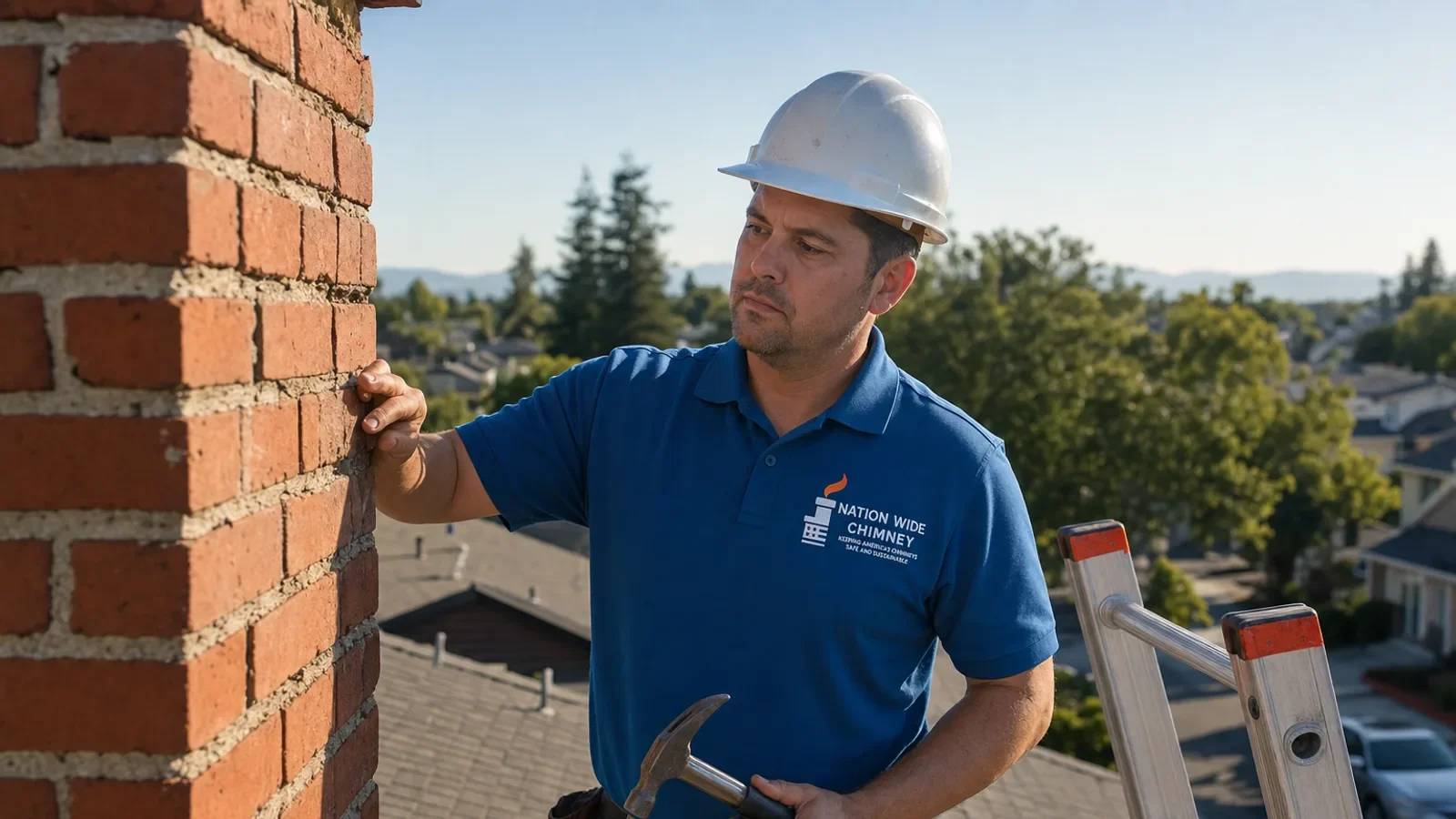
That chalky white residue on the outside of a chimney is called efflorescence. It forms when water moves through the masonry, picks up mineral salts, and deposits them on the surface as it evaporates. Efflorescence itself is not the structural problem, it is evidence that water is actively moving through your brick and mortar. If you see efflorescence spreading or returning after cleaning, the underlying moisture pathway has not been addressed. Left alone, that moisture continues to degrade the mortar from the inside out.
Spalling Brick
Spalling happens when the face of a brick pops, flakes, or crumbles away. In Sunnyvale, it is most often caused by moisture that has penetrated the brick and then expanded during temperature changes. Spalling bricks cannot be repaired in place, they need to be replaced. More importantly, spalling is a sign that the surrounding bricks are likely absorbing moisture too, even if they have not yet started to shed material. Catching spalling early limits how many bricks need replacement. Ignoring it means the damage spreads to adjacent courses.
Smoke Backing Into the Home
A fireplace that smokes into the living room rather than drawing properly is telling you something is wrong with the draft. Common causes include a blocked or damaged flue, a closed or stuck damper, negative air pressure in the home, or a flue that is sized incorrectly for the firebox. Some of these causes are simple fixes. Others, like a collapsed or heavily obstructed liner, require more involved work. Smoke backing into a home also deposits creosote in unintended places, which creates its own set of concerns. This symptom should not be dismissed as a drafting quirk.
Visible Gaps in the Mortar Crown or Joints
You do not need to climb on the roof to notice some warning signs. If you can see daylight through mortar joints from the ground, or if the crown visibly has cracks running across it, those are gaps that water and wildlife are already using as entry points. Mortar gaps that are visible to the naked eye from street level are typically well past the early-intervention stage.
What a Proper Chimney Inspection Covers
NFPA 211 Level Definitions
The National Fire Protection Association’s standard NFPA 211 defines three levels of chimney inspection, and understanding them helps homeowners evaluate what they are being offered. A Level 1 inspection covers accessible portions of the chimney exterior and interior without special tools. A Level 2 inspection, which is required after any change in use, after a chimney event like a chimney fire, or when buying or selling a home, includes video scanning of the flue interior. A Level 3 inspection involves removal of components to access concealed areas and is reserved for situations where serious hidden damage is suspected. Nation Wide Chimney Sweep and Repair in Sunnyvale performs inspections at all three levels, and the technician will recommend the appropriate level based on the chimney’s age, history, and any symptoms you have described.
What Inspectors Document
A thorough inspection report documents the condition of the firebox, damper, smoke chamber, liner, crown, cap, flashing, and exterior masonry. Photographs from the flue camera give you a visual record of liner condition that a verbal description cannot fully convey. This documentation matters when you are comparing repair quotes, planning a home sale, or filing an insurance claim after storm or seismic damage.
Inspection Frequency for Sunnyvale Homes
NFPA 211 recommends that chimneys used regularly be inspected at least once per year. For Sunnyvale homeowners who use their fireplace seasonally, an annual inspection before the first fire of the season is a practical standard. Homes that have not had an inspection in several years, or that were purchased without a Level 2 inspection, should be prioritized. A chimney that has gone uninspected for a decade in an older Sunnyvale neighborhood is very likely to have at least one condition that has progressed from minor to moderate in that time.
Comparing Repair Scopes: A Quick Reference
| Repair Type | What It Addresses | Complexity | Key Cost Drivers |
|---|---|---|---|
| Mortar tuck-pointing | Eroded joints between bricks | Moderate | Linear footage of affected joints, accessibility |
| Crown repair or replacement | Cracked or missing chimney crown | Moderate | Severity of cracking, chimney height |
| Flashing repair or replacement | Water entry at roof-chimney junction | Moderate | Roof pitch, flashing material, extent of deterioration |
| Chimney cap installation | Open flue, pest and water entry | Low | Flue size, cap material |
| Liner relining | Cracked or deteriorated flue liner | High | Flue length, liner type, access conditions |
| Brick replacement (spalling) | Damaged or deteriorated brick faces | Moderate to High | Number of bricks, matching brick availability |
| Above-roofline rebuild | Structurally compromised upper chimney | High | Number of courses, scaffolding needs, material |
How to Evaluate a Chimney Repair Quote
What a Trustworthy Quote Includes
A well-prepared chimney repair quote should itemize the work being proposed rather than presenting a single lump sum. You should be able to see which specific components are being repaired or replaced, what materials will be used, and how the technician arrived at the scope. If a quote lists only a total figure with no breakdown, ask for the line-item detail. Understanding what you are paying for also helps you verify that the proposed work actually matches what the inspection found.
Signs a Quote May Be Understating the Problem
Occasionally, an initial quote addresses only the most visible symptom without accounting for the underlying cause. A quote that proposes to patch a cracked crown without addressing the moisture infiltration that caused the crack, for example, is likely to result in a follow-up repair in a relatively short time. Ask the technician to explain how the proposed repair prevents the same problem from recurring. A thorough answer is a good sign. Vague reassurances are not.
Permits and Code Compliance in Sunnyvale
Some chimney repairs in Sunnyvale require a building permit, particularly structural work and liner replacements. Requirements vary based on the scope of work and the jurisdiction’s current standards, so the right approach is to ask your contractor which permits apply to your specific job and confirm they will be pulled before work begins. Unpermitted structural repairs can create complications when you sell the home or file an insurance claim. A reputable contractor handles the permit process as part of the job.
Frequently Asked Questions
How often should I have my chimney inspected in Sunnyvale?
At least once a year if you use the fireplace regularly. NFPA 211 recommends annual inspections for chimneys in active use. If your chimney has not been inspected in several years, schedule one before the next fire season regardless of whether you have noticed symptoms.
Can I tell from the ground if my chimney needs repair?
Some signs are visible from the ground: spalling brick, white efflorescence staining, visible mortar gaps, a cracked crown, or a missing cap. However, liner damage and internal structural issues are not visible without camera equipment. A ground-level check is a starting point, not a substitute for a proper inspection.
What causes a chimney to leak even when it has not rained heavily?
Light or intermittent rain is often enough to penetrate a compromised crown, failed flashing, or porous mortar joints. Chimneys with multiple small entry points can accumulate moisture from even modest rainfall. Fog and condensation also contribute to moisture buildup in Bay Area chimneys, especially those that are not used regularly and have no cap to limit interior humidity.
Is a chimney inspection required when buying a home in Sunnyvale?
A general home inspection does not typically include a detailed chimney evaluation. A Level 2 chimney inspection is strongly recommended before purchasing any home with a fireplace. It is the only way to know the liner condition and identify hidden structural issues before they become your responsibility.
What is the difference between a chimney sweep and a chimney inspection?
A chimney sweep removes creosote, soot, and debris from the flue and firebox. An inspection evaluates the structural and safety condition of the chimney system. The two services are often performed together, but they address different things. A clean chimney can still have a cracked liner or failing flashing that only an inspection will catch.
How long does a typical chimney repair take?
Simple repairs like cap installation or minor crown patching can often be completed in a single visit. More involved work like relining or masonry rebuilding may take multiple days, particularly if mortar needs curing time between stages. The technician should give you a realistic timeline when presenting the repair scope.
Conclusion
Chimney repair costs in Sunnyvale are shaped by factors that are specific to this region: older housing stock, Bay Area moisture patterns, and seismic history all play a role. The homeowners who spend the least over time are the ones who catch problems early through regular inspections rather than waiting for a symptom to force the issue. If your chimney has not been evaluated recently, or if you have noticed any of the warning signs covered here, the right next step is straightforward. Schedule your chimney inspection with Nation Wide Chimney Sweep and Repair and get a clear picture of what your chimney actually needs before the next fire season arrives.