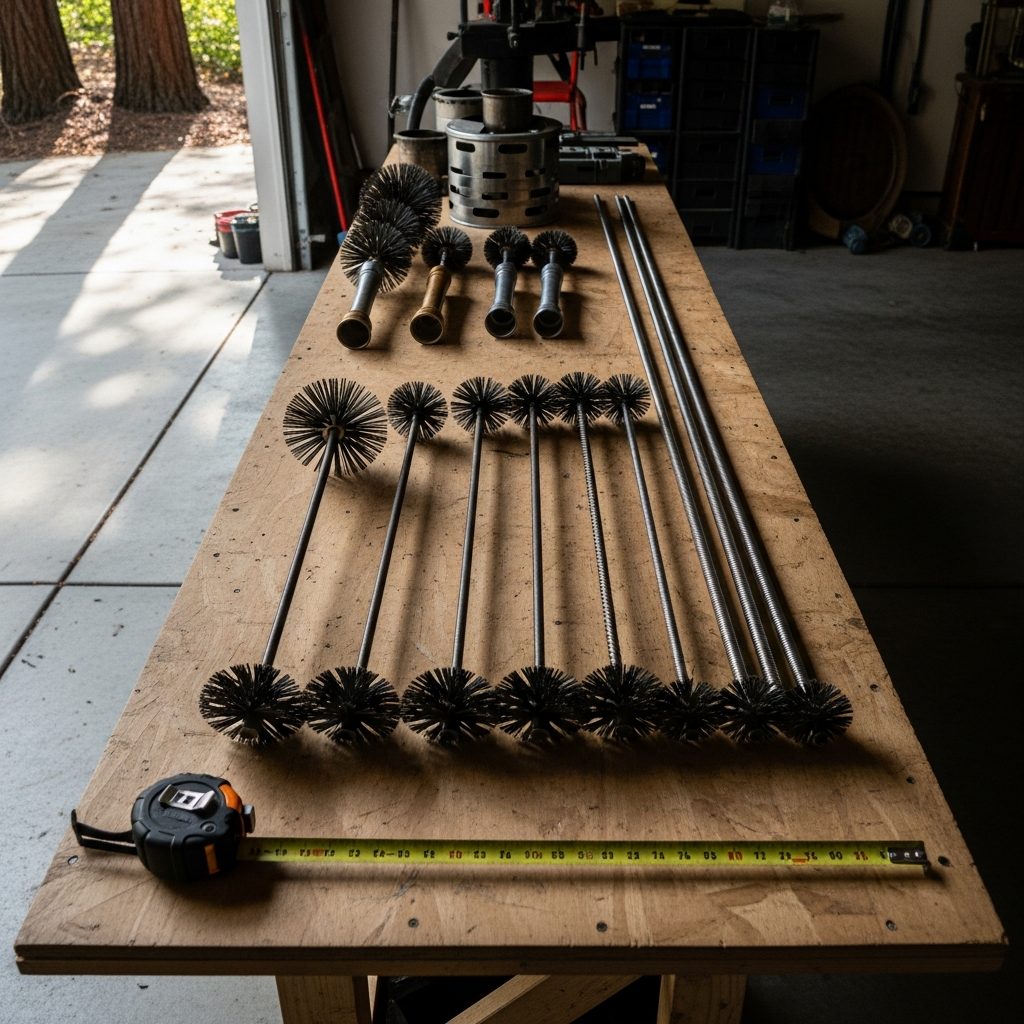
Standing in a Sunnyvale garage surrounded by tools and weekend projects, it is easy to look at a rack of brushes and think they are all the same. But if you have ever watched a professional tend to a fireplace on a breezy South Bay afternoon, you know that brush selection can make or break the job. Our local mix of mid‑century masonry, stainless steel liners from remodels, and factory‑built chimneys means there is no single “right” tool. Choosing the right brush for your chimney is about understanding your flue’s material, size, shape, and the way you burn in our unique climate. Before you buy or schedule, it helps to picture what effective chimney cleaning looks like inside your specific system.
When I visit homes from Lakewood Village to Cherry Chase, I see the same pattern: a well‑meaning homeowner tried a brush that looked tough but either missed corners or scuffed a delicate liner. The truth is that soot and creosote are stubborn in different ways, and your flue’s interior demands a brush that makes full, safe contact. That blend of contact and care is the entire game. Too soft, and residue stays behind; too aggressive, and you risk damaging tile, metal, or joints, creating future headaches you do not want.
Start with what your flue is made of
Most Sunnyvale homes fall into a few categories: traditional masonry with clay tile liners, stainless steel liners added during a remodel, or insulated factory‑built chimneys designed as systems. Each type points to a different range of brushes. Clay liners tolerate stiffer bristles, but that does not mean a brute‑force approach is wise. There is a difference between assertive cleaning and reckless scraping, and the best results come from thoughtful passes that remove residue without chipping mortar or cracking tile lips. Stainless steel demands more finesse; poly brushes are often preferred because they clean effectively without gouging or scoring the surface. Factory‑built chimneys require precise brush sizing and the restraint to protect engineered components that are essential to safe operation.
The best first step is to confirm the flue’s dimensions. It is surprising how often a flue that looks square or round from the living room reveals itself to be slightly oval or larger than expected. A brush that under‑fills the space rides the center and leaves residue on the sides; a brush that over‑fills can bind or deform, making you think you are cleaning when you are really just fighting the tool. Accurate measurement is the invisible secret behind satisfying results.
Creosote behavior in our microclimate
Sunnyvale’s weather leaves a signature inside chimneys. During stretches of damp mornings and cool evenings, short fires that never truly roar can encourage a tacky layer that grabs onto bristles and resists easy removal. In the dry, colder snaps we see some winters, longer, hotter burns leave fluffier soot that a well‑sized brush clears readily. Brush choice must match these realities. For tacky layers, a firmer bristle with patient technique is better than an oversized monster brush that bullies the flue. For powdery soot, a properly sized poly brush glides through, picking up residue without leaving fine scratches on metal liners.
When deposits begin to glaze, typical bristles may underperform no matter how strong your arms or drill are. At that point, specialized heads or methods become necessary. This is where professional judgment shines: knowing when to stop pushing a conventional brush and switch tactics prevents damage and speeds the path to clean. For homeowners, the lesson is to recognize when a simple clean is no longer simple and to invite trained eyes before frustration leads to mistakes.
Rod selection matters as much as the brush
Brushes do not work in isolation. Flexible rods allow you to steer through offsets common in retrofit liners, while stiffer rods transmit force for long, straight flues in older masonry. In Sunnyvale’s remodeled homes, it is common to encounter a flue that changes direction briefly to meet an insert. That is a job for flexibility combined with a brush that keeps contact even as angles shift. On the other hand, a classic straight‑up chimney that towers over a ranch roof asks for steady, predictable transmission of movement so your brush does not chatter or skip.
Connection types and the ability to reverse without uncoupling matter, too. Nothing raises the pulse like a lodged brush in an offset, and secure, compatible fittings are your insurance policy. Professionals carry multiple rod sets because one size seldom fits all; homeowners should at least make sure their rods are rated for the direction and torque they plan to use, especially if they are considering drill‑assisted methods.
Drill‑assisted versus manual brushing
There is a time and place for power. Drill‑assisted systems can shorten the job in long, straight, lightly sooted flues and can deliver consistent contact that is hard to maintain by hand. Yet power invites overconfidence. In a flue with delicate metal or in the presence of tacky, semi‑glazed deposits, high RPMs can smear residue around or leave fine scuffs that invite faster buildup later. Manual brushing, slow and steady, gives you more feedback. You feel the texture of the interior, you notice when resistance changes, and you can adjust pressure and angle in real time. The right choice is the one that respects your flue’s material and current condition, not the one that looks impressive in a quick video clip.
If you go the drill route, size the brush precisely and use moderate speed. If you work by hand, accept that several measured passes beat one aggressive push. In both cases, the goal is full contact without harm, and the reward is a flue that drafts cleanly and safely.
Matching brush profiles to inserts and stoves
Many Sunnyvale fireplaces host inserts that transform efficiency, but the interior pathways can be narrower and more intricate than open hearths. A brush that does great work in a standard clay flue may be clumsy around baffles and collars. In these settings, smaller heads paired with flexible rods often perform better, complemented by careful vacuuming with proper filtration. Pellet stoves present their own demands, with ash that migrates into tight corners and horizontal runs. The correct brush here is often compact and paired with crevice tools to collect fine residue without stirring it into your living space.
From a homeowner’s perspective, the task is to map the path before brushing. Think like the soot: where does it hang up, what angles does it face, and how can a brush meet it fully without stress on the system? When your plan follows the flue’s design, you clean smarter, not harder.
Brush care and replacement
A tired brush is worse than no brush at all because it gives the illusion of progress without real contact. In Sunnyvale’s mix of dry heat and damp spells, bristles can harden, splay, or soften depending on storage and use. After each job, clean your brush, let it dry thoroughly, and store it away from direct sun. Inspect for bent or broken bristles that could scratch metal liners or leave gaps in contact. If the diameter no longer matches the flue size or the bristles have lost their spring, replace the brush. New bristles cost far less than the time wasted by an ineffective pass.
Rods deserve attention as well. Check couplings, look for cracks, and retire rods that kink easily. A smooth, predictable feel during use is not just pleasant—it is safer. The more control you have, the less likely you are to cause unintended damage if the brush catches on a joint or tile lip.
How professionals decide on the fly
One advantage of hiring experienced help is their library of brushes and heads and the judgment to switch without hesitation. They carry poly for liners that need a gentle touch, wire for resilient clay, whips for stubborn layers, and specialty tools for glazed deposits. More important than the inventory is the decision‑making: observation of the deposit type, the feel of the interior, and the way the brush responds. If the brush skates over shiny residue, they do not double down; they change tactics. If a brush binds at a certain point, they consider whether an offset or protrusion is to blame and adapt the rod or head accordingly.
This blend of science and feel is learned over hundreds of chimneys. For homeowners who enjoy DIY projects, it can be tempting to power through. But sometimes the smartest choice is to pause, clean up, and invite an expert opinion before a sticky situation becomes a costly one.
Sunnyvale specifics that influence your choice
Our winds funnel differently on the west side of town compared to the neighborhoods closer to Highway 101, and that changes draft patterns. A slightly stronger draft can dry soot, making it flakier; a lazier draft on damp nights can leave tacky residue. If you know your home tends toward smokier starts or if you sense occasional downdrafts, share that with a professional or factor it into your brush choice by leaning toward a profile that maintains even contact during slow, deliberate passes. Your goal is consistency over spectacle, especially if you are working in a system with inserts or tight offsets.
Remodeled homes with modern windows and better sealing can also starve a fireplace of make‑up air. If you notice fires that struggle to catch, the issue may not be your brush at all but air supply. In those cases, brush selection still matters, but so does technique and simple steps like cracking a nearby window when lighting a fire. A clean flue plus healthy airflow equals an easier, more satisfying burn.
Questions Sunnyvale homeowners ask about brushes
Do I need a different brush for a stainless steel liner?
Yes. Poly bristles are generally preferred for stainless because they clean effectively without scratching or gouging. The exact size should match your liner closely to ensure full contact without binding.
How do I know the brush is the right size?
Measure the interior dimensions of the flue accurately. A properly sized brush offers noticeable, even resistance without seizing. If it skates loosely, it is too small; if it jams or deforms excessively, it is too large.
Are drill‑powered brushes safe?
They can be, provided you size the head correctly, use moderate speed, and understand your flue’s material and deposit type. In delicate liners or with tacky residue, slower manual passes often produce better results and reduce the risk of damage.
How often should I replace my brush?
Replace it when the bristles lose their spring, when diameter shrinks from wear, or when bent bristles threaten to scratch. Regular inspection after each use will tell you more than a fixed timeline.
What if I encounter shiny, glazed deposits?
Stop and reassess. Conventional brushing may not be enough, and aggressive attempts can worsen the situation. This is the moment to consider specialized tools or to call in a professional who can evaluate and address the glaze safely.
If you prefer to skip the guesswork and know the job will be done with the right tools for your flue, bring in a local crew that treats brush selection as part of a broader safety plan. A short conversation about your chimney’s material, size, and how you burn can save hours of trial and error and keep your home cleaner during the process.
When you want a smooth, efficient appointment and a flue that drafts like it should, schedule professional chimney cleaning and let seasoned hands match the brush to your Sunnyvale home.